

Faith in the Workplace: How to Live Your Values Without Preaching
NOVEMBER 25, 2025

Marcus Chen woke at 6:47 AM on a Sunday morning, reached automatically for his phone before his eyes fully opened, and spent the next forty-three minutes scrolling through notifications that accumulated overnight while his body attempted rest that his mind refused granting permission for truly. By the time he emerged from bed, he had already absorbed seventeen news alerts about global crises he could not influence, watched twelve video clips that people he barely knew posted about their apparently perfect lives, responded to work emails that Sunday morning absolutely did not require addressing immediately, and checked his social media follower counts on four separate platforms because yesterday’s numbers felt inadequately validating of his existence somehow. The sun streaming through his window revealed a beautiful late spring morning that promised warmth and renewal, yet Marcus felt exhausted before breakfast, anxious without specific cause, and vaguely guilty about time disappeared into digital consumption that satisfaction never delivered despite promises each swipe seemed to offer enticingly. As he started brewing coffee, his phone buzzed again with another notification, and Marcus felt the familiar Pavlovian compulsion to check it immediately even though he could not remember a single thing he had read during the past hour of scrolling that consciousness had barely registered as actual experience rather than mere stimulation that engagement mimicked without delivering substance that meaning requires possessing authentically. In that moment of noticing his own mechanical responsiveness to digital stimuli, Marcus recognized that he had become something he never intended becoming: someone whose attention belonged more to algorithms than to his own intentions, whose presence resided more in virtual spaces than physical reality, whose rest had been colonized so thoroughly by connectivity that genuine restoration seemed like a distant memory from childhood before screens consumed every spare moment that boredom might otherwise have filled with reflection or genuine rest that restoration actually produces meaningfully.
This article explores the emerging practice of digital sabbath as a contemporary spiritual discipline that addresses the unique challenges of living in an age where screens mediate nearly every aspect of existence from work to relationships to entertainment to news consumption. We will examine why taking regular breaks from digital technology serves purposes far deeper than mere productivity optimization, explore the hidden costs that constant connectivity extracts from our psychological and spiritual wellbeing, provide practical frameworks for implementing sustainable digital sabbath practices, and investigate how intentional rest from screens creates space for the kind of presence, reflection, and renewal that hurried modern life rarely accommodates naturally without deliberate protection from the forces that fragment attention continuously.
Before exploring how to practice digital sabbath effectively, we need to recognize what exactly we have lost through allowing screens to infiltrate every moment that quietness might otherwise occupy naturally. The issue extends far beyond simple time management or productivity concerns into territory that touches fundamental questions about what it means to be human, what constitutes genuine rest, and how we construct identity and meaning in ways that transcend the performance metrics that digital platforms measure and reward continuously through mechanisms designed explicitly to capture attention regardless of whether that attention serves our actual wellbeing or merely enriches companies whose business models depend upon colonizing consciousness as thoroughly as possible without triggering awareness sufficient to motivate rebellion against the hijacking.
Consider what rest meant before smartphones made it technically possible to carry work, entertainment, social connection, news consumption, shopping, and countless other activities in your pocket everywhere you go without exception. Rest involved actual cessation from activity rather than merely switching from one form of stimulation to another that rest mimicked superficially while providing none of the restoration that genuine rest produces through allowing nervous systems to downregulate, minds to wander freely without direction, and consciousness to exist without the constant demand for response that connectivity creates relentlessly. When you finished work, you actually finished work because physical distance from the office meant work could not follow you home unless someone made the significant effort of calling your landline telephone, which social norms discouraged outside genuine emergencies that respect for boundaries protected against violating casually. When you attended your child’s soccer game, you actually attended the game rather than photographing it for social media while simultaneously answering work emails and checking news updates that pulled attention away from the present moment happening right in front of you that presence might appreciate fully if consciousness remained undivided by competing demands that multitasking attempts accommodating impossibly.
The colonization of rest represents more than inconvenience or annoyance. It strikes at something essential about human flourishing that wisdom traditions across cultures have recognized for millennia: we need regular periods of true cessation from productive activity, from social performance, from information consumption, from the endless making and doing that characterizes daily life in ways that identity construction requires but that obsessive engagement transforms into imprisonment when balance disappears completely. Research from organizations like the Pew Research Center documents how dramatically our relationship with technology has shifted in just the past decade, with most adults now reporting that they check their phones within five minutes of waking and that being without their device creates genuine anxiety that dependence has cultivated successfully through features designed to create exactly this kind of attachment that freedom contradicts fundamentally.
We carry devices that promise to connect us to everyone and everything, yet we feel more isolated than previous generations who possessed far less communication technology. We have access to more information than any civilization in human history, yet we feel less wise and more confused about fundamental questions regarding meaning and purpose. We save time through digital efficiency, yet we experience chronic time scarcity that stress perpetuates through eliminating the boundaries that rest requires protecting fiercely. The digital sabbath addresses this paradox not through rejecting technology entirely but through creating intentional separation that perspective restores regarding what technology serves versus what it has come to dominate unconsciously.
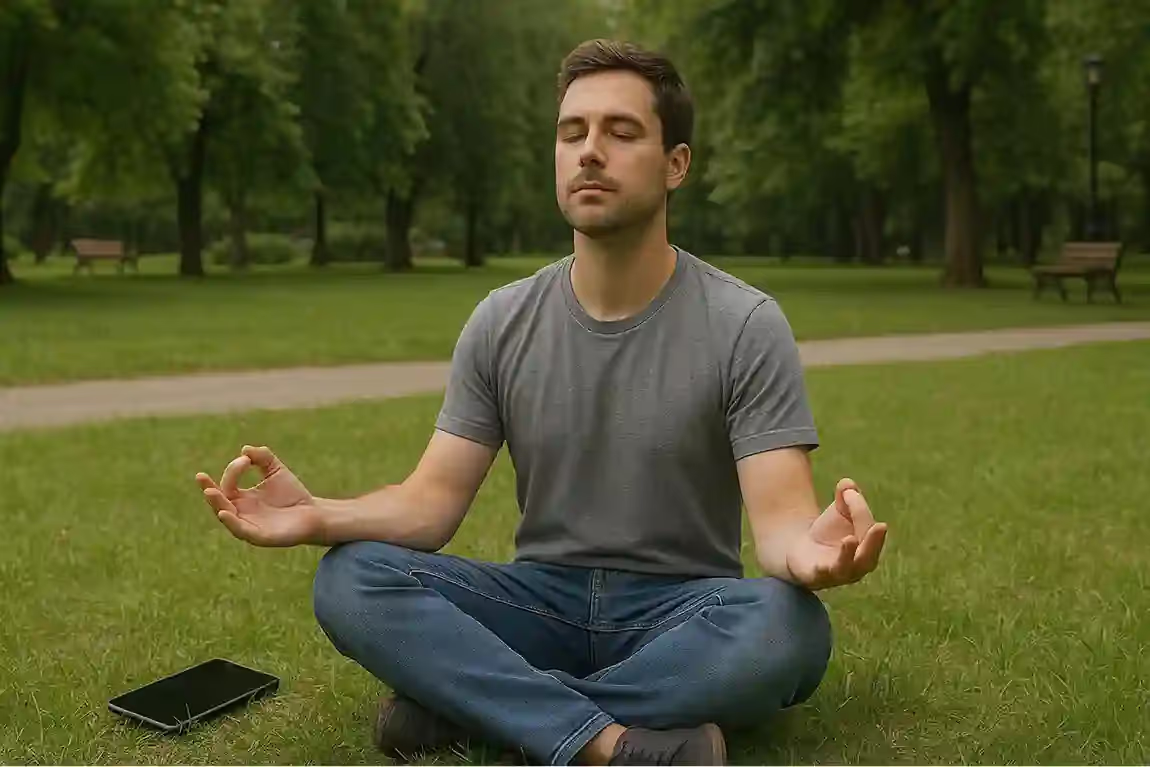
The concept of digital sabbath draws inspiration from ancient religious traditions that designated one day per week as sacred time set apart from ordinary activities that daily life demands continuously. In Jewish tradition, Shabbat begins at Friday sunset and continues until Saturday evening, creating twenty-five hours during which work ceases, commercial transactions stop, and the focus shifts from making and doing to simply being present with family, community, and the sacred dimension of existence that weekday preoccupations often obscure completely through constant activity that reflection never finds space within naturally. Christians historically observed Sunday as a day of rest and worship, while Islam designates Friday as special for communal prayer and reduced work activities that devotion accommodates appropriately.
Digital sabbath adapts this ancient wisdom for contemporary life by recognizing that our modern equivalent of work involves not just employment but the entire apparatus of screens and connectivity that consciousness colonizes through making demands that cease only when we deliberately create boundaries that protection requires establishing intentionally. A digital sabbath typically involves choosing one day per week to abstain from screens and digital devices as completely as your life circumstances allow reasonably. This means no smartphone, no computer, no television, no tablets, no smartwatches, and no other devices that digital interfaces employ for delivering content, communication, or connection that virtual experience substitutes for direct engagement with physical reality and actual human presence that screens mediate in ways that intimacy diminishes subtly yet significantly over time through training attention to prefer curated performance over authentic vulnerability.
The practice serves multiple purposes that simple entertainment substitution misses completely. First, it creates neurological rest from the constant stimulation that digital devices provide through notifications, updates, messages, and the infinite scroll that dopamine hits deliver reliably enough that addiction forms without conscious awareness until dependence reveals itself through the anxiety that separation triggers immediately. Second, it restores capacity for sustained attention and deep focus that constant task-switching erodes progressively until concentration becomes difficult even when genuine interest motivates engagement that distraction undermines continuously. Third, it opens space for the kind of boredom that creativity and reflection require as preconditions because interesting thoughts emerge primarily when consciousness is not being filled continuously with external input that prevents internal processing from occurring naturally. Fourth, it reconnects you with physical reality, direct human contact, nature, bodily sensation, and other aspects of existence that screen-mediation diminishes in ways that gradual erosion prevents noticing until significant loss has already occurred unconsciously over years of progressive digital immersion that normality masks effectively.
Choose Your Sacred Day With Intention Rather Than Convenience Alone Many people default to Sunday for digital sabbath because religious tradition already designates it as rest day in Christian cultures, but your optimal day depends on your specific life circumstances, work schedule, and family rhythms that accommodation requires respecting practically. Some people find Saturday works better because it precedes work weeks rather than ending them, creating anticipatory energy around rest that arrival celebrates rather than the exhausted collapse that Sunday sometimes represents after draining weeks that recovery necessitates urgently. Others choose a weekday when they typically work from home, converting what would be eight hours of screen time into eight hours of different activities that variation introduces beneficially. The key involves selecting a consistent day that repetition establishes as protected time that habits form around naturally through weekly rhythm that expectation creates progressively, rather than treating it as occasional luxury that happens only when circumstances align perfectly, which means it never happens because life always provides justifications for postponing rest until some imaginary future moment when obligations relent magically without the boundaries that protection demands establishing firmly regardless of inconvenience that discipline initially requires accepting temporarily.
Prepare the Day Before Through Practical Logistics That Anxiety Prevents One major obstacle that prevents people from implementing digital sabbath involves the anxiety that disconnecting creates around potentially missing something urgent that response would require providing immediately supposedly. While true emergencies remain possible, the overwhelming majority of things that feel urgent in the moment reveal themselves as completely manageable with twenty-four hour delays when perspective allows honest assessment free from the artificial urgency that digital communication creates through making everything seem equally important and time-sensitive regardless of actual priority that clarity would reveal if panic subsided sufficiently for evaluation to occur rationally. The day before your digital sabbath, inform anyone who might genuinely need reaching you that you will be unavailable the following day except through phone calls to a specific number if they face actual emergencies that delay cannot accommodate reasonably. Set up auto-responders on email explaining your unavailability. Finish any genuinely time-sensitive work. Prepare activities, meals, and logistics for your sabbath day so that necessity does not force device usage that planning would prevent requiring completely. This preparation transforms the sabbath from stressful deprivation into genuinely restorative rest because anxiety does not contaminate the experience through constant worry about obligations that planning addresses proactively rather than reactively.
Create Physical Separation From Devices Through Spatial Boundaries The most effective digital sabbaths involve physically removing devices from your immediate environment rather than simply resolving not to use them through willpower alone that temptation eventually overcomes when boredom or habit triggers reach for phones that proximity makes available constantly. Before your sabbath begins, place your phone, laptop, and other devices in a drawer, closet, or other location that requires deliberate effort to access rather than unconscious reaching that happens automatically when devices remain in pockets or on tables where visibility and availability combine to erode resolve progressively. Some people give their phones to trusted friends or family members who agree not to return them until the sabbath period ends completely. Others use time-lock containers that prevent access for programmed durations that commitment enforces mechanically when personal discipline might waver during difficult moments that every sabbath initially involves while habits form slowly through repetition that perseverance maintains consistently. The goal involves making device usage require conscious choice rather than allowing autopilot behavior that awareness never registers occurring until you realize twenty minutes have disappeared into scrolling that intention never authorized deliberately but that availability enabled effortlessly.
What actually happens during a digital sabbath surprises most people who attempt the practice for the first time because our assumptions about how we will spend screen-free time rarely match the reality that unfolds when possibilities expand beyond the narrow channel that constant device usage constrains consciousness within habitually. The initial hours typically bring discomfort that restlessness expresses through the urge to check phones that muscle memory reaches for automatically dozens of times daily without conscious awareness until absence makes the habit visible suddenly through frustrated reaching that finds nothing where expectation assumed devices would remain available perpetually for consultation whenever boredom threatened or questions arose or validation seemed necessary through checking metrics that quantify worth numerically somehow.
This initial discomfort serves as diagnostic information about how dependent you have become on digital stimulation rather than signal that the sabbath represents mistake that abandonment justifies immediately. Think of it as parallel to the headache that caffeine withdrawal produces when regular coffee drinkers skip their morning cup. The headache does not indicate that caffeine is necessary for survival but rather reveals dependence that habits have established through repetition that neural pathways adapted to accommodate until normal functioning began requiring the substance that addiction created progressively through mechanisms that awareness never detected operating continuously. Similarly, the restless discomfort of early digital sabbath hours reveals how thoroughly your attention has been trained to expect constant stimulation that baseline consciousness now experiences as deprivation when removed temporarily through deliberate practice that retraining requires implementing persistently.
After pushing through initial discomfort, most people report that something shifts remarkably around the fourth or fifth hour of their first digital sabbath. Time begins feeling different, expanding rather than contracting the way it does during screen-mediated days that compression characterizes through constant task-switching that prevents deep immersion in single activities that flow states require developing naturally when interruption does not fragment attention continuously. Colors seem more vivid. Sounds become more noticeable. Physical sensations register more clearly. Conversations feel more connected. Books engage more deeply. Meals taste more interesting. Children seem more present and responsive. The qualities that mindfulness teachers describe through meditation instruction arise spontaneously without special effort when the constant distraction of devices stops pulling consciousness away from direct experience that presence enables noticing richly when attention remains undivided by competing demands that multitasking attempts accommodating impossibly. Research from institutions like Harvard Medical School increasingly documents how excessive screen time affects brain function, attention span, and emotional regulation in ways that reduction ameliorates measurably through interventions that boundary creation enables implementing successfully.
The digital sabbath reveals what you have been missing not through showing you new things but through allowing you to actually notice what was always present but that scattered attention prevented registering consciously. The richness existed continuously, waiting patiently for awareness to return from virtual spaces where consciousness had relocated so completely that physical reality seemed dull by comparison to the hyperstimulation that screens provided endlessly through mechanisms designed explicitly to capture attention regardless of whether that capture served wellbeing authentically or merely extracted value from consciousness that platforms monetized ruthlessly.
Even after recognizing the value that digital sabbath offers theoretically, most people encounter significant resistance when attempting to implement the practice consistently. Some of this resistance stems from practical logistics that modern life genuinely creates through work obligations, family coordination, or other legitimate needs that technology facilitates managing efficiently. However, much of the resistance originates from psychological and social factors that honest examination reveals as less legitimate than they initially appear when serving as justifications for avoiding discomfort that change requires tolerating temporarily while new patterns establish themselves through repetition that habits form around progressively.
The most common objection involves FOMO , the fear of missing out that social media deliberately cultivates through showing curated highlights of others’ experiences that your absence might cause you to miss witnessing in real-time supposedly. This fear contains profound irony when examined carefully. While you worry about missing other people’s digital performances of their lives, you actually miss your own actual life through spending hours scrolling through representations of experiences instead of having direct experiences yourself that richness and meaning require engaging with physically rather than through mediated consumption that observation substitutes for participation increasingly. The question becomes not what you might miss online during your sabbath but rather what you are currently missing in physical reality through spending so much time in virtual spaces that actual presence has become rare rather than normal as your default mode of existence.
Another common obstacle involves the legitimate challenge that many jobs now require some degree of digital availability that complete disconnection complicates significantly. If you work in healthcare, emergency services, or other fields where genuine emergencies require response, you need adapting your digital sabbath to accommodate these realities without abandoning the practice entirely through using exceptions as justifications for avoiding boundaries altogether. Consider keeping an old-style cell phone that makes phone calls only without internet access, email capability, or apps that distraction enables easily. Give this number to anyone who might need reaching you for true emergencies, and turn off your smartphone while keeping the basic phone available for the one-in-a-thousand chance that genuine crisis demands response that delay cannot accommodate reasonably. This preserves accessibility for actual emergencies while preventing the casual checking that most phone usage involves when no emergencies justify the attention that habit directs toward devices continuously despite absence of urgent need that interruption would serve legitimately.
People who maintain consistent digital sabbath practices for several months report benefits that extend far beyond the obvious advantages of having more time for non-screen activities. The deeper transformation involves changed relationship with technology during the other six days when device usage continues necessarily for work and legitimate connection that modern life requires facilitating practically through tools that value provides when boundaries prevent domination from replacing utility gradually through unchecked expansion that awareness never noticed occurring progressively.
After experiencing regular screen-free days, most people notice that their weekday device usage becomes more intentional rather than compulsive. The autopilot reaching for phones during every spare moment diminishes as you develop tolerance for the brief moments of boredom or waiting that previously triggered immediate device consultation that information seeking rationalized superficially while actually serving the compulsion that dopamine hits reinforced continuously through providing stimulation that boredom relief promised delivering reliably. You begin recognizing when you genuinely need using technology for specific purposes versus when you reach for it out of habit, anxiety, or avoidance that distraction enables escaping temporarily from emotions or thoughts that presence would require experiencing directly if escape routes remained unavailable constantly.
Additionally, regular sabbath practice restores what might be called “attention fitness” that constant distraction erodes progressively until concentration becomes difficult even when motivation supports focus theoretically. Think of attention as parallel to physical fitness that exercise develops but that sedentary lifestyle diminishes gradually until walking up stairs produces breathlessness that conditioning would prevent easily if maintained consistently through regular practice. Your capacity for sustained focus improves through weekly practice at maintaining attention without the crutch that devices provide when difficulty or boredom threatens continued engagement with challenging material that depth requires persisting through despite temptation to switch activities whenever ease disappears temporarily. Books become easier to read. Conversations become easier to maintain without mental drift. Work projects become easier to complete through deep focus sessions that quality work requires producing when excellence matters beyond merely meeting minimum standards sufficiently for avoiding criticism superficially. Spiritual practices like prayer, meditation, or contemplation deepen significantly when devices do not interrupt regularly through notifications that break concentration repeatedly until continuity becomes impossible maintaining successfully despite best intentions that interruption undermines continuously.
One of the most common anxieties about digital sabbath involves worry about how to fill the time that devices normally consume throughout daily routines that structure provides automatically through endless content that engagement never exhausts completely. However, this anxiety reveals how thoroughly we have forgotten what humans did with leisure time before screens colonized every spare moment comprehensively. Here are activities that sabbath participants consistently report finding surprisingly fulfilling after initial discomfort passes:

While digital sabbath produces practical benefits around productivity, mental health, and relationship quality, reducing the practice to self-optimization misses its deeper spiritual significance that transcends instrumental concerns about improved functioning that benefits deliver measurably through metrics that quantification enables tracking objectively. At its core, the digital sabbath represents a radical act of resistance against the colonization of human consciousness by commercial forces that profit from fragmenting attention, monetizing every moment, and transforming people into consumers rather than citizens, into profiles rather than persons, into data points rather than souls that dignity deserves respecting beyond economic value that extraction measures narrowly.
The practice declares that you are more than your productivity, more than your online presence, more than your consumption patterns, more than the sum of your digital interactions that platforms track meticulously for purposes that your interests rarely align with authentically despite convenience that services provide superficially while extracting value from attention that alternative uses might serve more meaningfully. By setting aside one day where you refuse participation in the digital economy of attention, you reclaim sovereignty over consciousness that belongs to you rather than to algorithms designed explicitly to capture and hold awareness regardless of whether that capture enhances or diminishes flourishing that wellbeing requires achieving beyond mere stimulation that satisfaction mimics without delivering substance actually.
Religious wisdom traditions have always recognized that humans need regular reminders that we are more than our work, our status, our achievements, or our productivity that society values primarily through economic metrics that ignore dimensions of existence that cannot be quantified easily yet matter profoundly for wellbeing that wholeness requires integrating beyond narrow definitions that materialism imposes restrictively. The Sabbath commandment in Judaism does not say “rest if convenient” or “rest when you have finished everything” but rather commands ceasing from work unconditionally one day weekly regardless of how much remains undone because the human need for rest transcends productivity concerns that urgency always manufactures when boundaries do not protect time that restoration requires receiving regularly through practice that commitment maintains consistently. Organizations focused on digital wellness like the Center for Humane Technology are working to reshape how we design and interact with technology in ways that human flourishing serves rather than undermining progressively through exploitative patterns that profit prioritizes over wellbeing systematically.
Like most behavioral changes, digital sabbath often begins with strong enthusiasm that initial benefits reinforce powerfully through dramatic contrast with screen-saturated existence that normal had become unconsciously through gradual escalation that awareness never registered occurring progressively. However, sustaining the practice through periods when motivation wanes or when circumstances make disconnection inconvenient requires moving beyond reliance on enthusiasm toward building structural supports that consistency enables maintaining when feelings fluctuate naturally as they always do inevitably.
The first structural support involves making your commitment public through telling family, friends, and colleagues about your digital sabbath practice. This social accountability creates gentle pressure that adherence reinforces through not wanting to explain why you abandoned something you publicly valued enough to announce implementing intentionally. Additionally, explaining your practice to others often prompts them to consider trying it themselves, potentially creating community around the shared practice that mutual support enables sustaining more easily than isolation would facilitate maintaining individually without collective encouragement that difficulty benefits from receiving regularly.
Second, track your practice without becoming obsessive about perfection that rigid adherence demands maintaining impossibly through every circumstance that life presents unpredictably across weeks and months that practice spans temporally. Keep a simple journal noting which days you observed your digital sabbath and what you noticed during these screen-free periods that awareness revealed meaningfully. This tracking serves two purposes: it maintains awareness about consistency that intention supports through making gaps visible when life’s demands cause practice to slip gradually without conscious decision to abandon commitment deliberately, and it documents benefits that memory might otherwise forget when challenges tempt abandoning discipline that difficulty seems justifying during moments when motivation feels absent temporarily before perspective returns naturally.
Marcus Chen from our opening story decided to try digital sabbath after recognizing how thoroughly screens had colonized his consciousness and displaced genuine rest from his life completely. His first screen-free Sunday felt excruciating initially through the first three hours that restlessness dominated through constant impulses to check devices that absence made unavailable frustratingly. But he persisted through discomfort by going for a long walk without his phone, something he had not done in years despite living near beautiful trails that proximity made accessible easily yet that habits never utilized because walking without listening to podcasts seemed pointless somehow despite the contradiction that presence actually requires attention undivided by competing stimulation that multitasking attempts combining ineffectively. During that walk, Marcus noticed things he passed daily without ever seeing: a small community garden that neighbors maintained collaboratively, architectural details on buildings that beauty possessed despite familiarity, the quality of afternoon light filtering through trees that seasons changed progressively. He felt lonely initially without the constant companionship that his phone provided through making everyone accessible instantaneously, but this loneliness eventually transformed into solitude that reflection enabled emerging naturally when distraction stopped preventing internal processing from occurring continuously.
Six months into maintaining weekly digital sabbaths, Marcus reports that the practice has transformed not just his Sundays but his entire relationship with technology throughout all seven days that weeks contain collectively. He no longer reaches for his phone first thing upon waking because morning time feels precious for actual presence with himself and his thoughts rather than immediately filling consciousness with other people’s content, concerns, and curated performances that comparison triggers automatically through social media’s inherent structure that status competition facilitates systematically. His work productivity has improved paradoxically through having one day where work remains completely inaccessible, because this boundary prevents the always-on mentality that burnout creates through eliminating separation between work time and personal time entirely. His relationships have deepened because people notice when someone gives them full attention without phones mediating interaction constantly through their implied availability that priority communicates regardless of conscious intention. Most importantly, Marcus has reconnected with what he describes as his soul, the part of himself that observes experience rather than constantly performing for invisible audiences, the awareness that witnesses thoughts and feelings without being defined by them completely, the dimension of existence that transcends productivity and achievement and online presence to touch something essential about being human that no amount of digital connection can substitute for authentically.
The digital sabbath gave Marcus back to himself in ways that only absence revealed through showing what constant presence of screens had been preventing him from noticing about life, about others, and about the quiet depth that existence possesses when consciousness remains present long enough for reality’s richness to reveal itself fully beyond the superficial stimulation that screens provide endlessly without ever delivering satisfaction that genuine presence actually produces naturally when attention belongs to experience directly rather than to representations of experience that mediation substitutes inadequately.
NOVEMBER 25, 2025
NOVEMBER 25, 2025
NOVEMBER 25, 2025
NOVEMBER 25, 2025
NOVEMBER 25, 2025