

Christian Gratitude Practice: A Biblical Guide to Cultivating a Thankful Heart
NOVEMBER 25, 2025
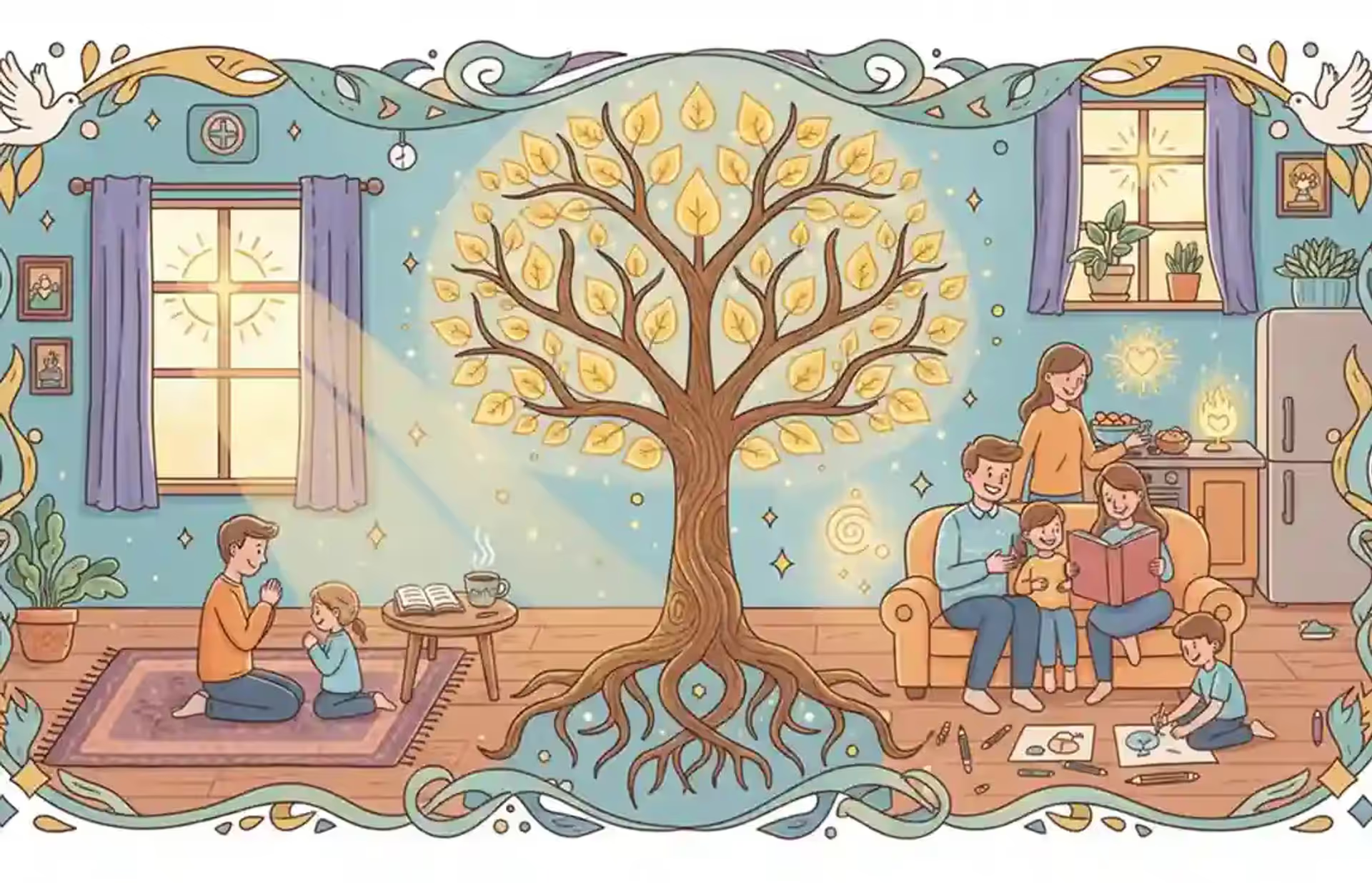
Jennifer Adams rushed through Monday evening like she rushed through most evenings, navigating the chaotic hour between arriving home from work and getting her three children fed, bathed, and into bed before exhaustion claimed whatever remained of her energy that the day had not already consumed completely. As she heated up leftovers while simultaneously helping her eight-year-old with homework and breaking up an argument between her five-year-old twins, Jennifer felt the familiar guilt about the family devotional time that parenting books recommended implementing consistently yet that reality never seemed to accommodate in schedules that left zero margin for additional activities regardless of their spiritual importance theoretically.
Sunday mornings at church provided one hour weekly when her family engaged faith together through worship and children's programs, but Jennifer knew that religious educators emphasized the importance of daily spiritual practices at home that Sunday attendance alone could never develop adequately despite her congregation's excellent teaching and vibrant community life. She had purchased a children's devotional book six months ago with sincere intentions about reading it together at dinner each evening, yet the book remained largely unused because dinnertime inevitably involved someone crying, someone spilling, someone refusing to eat, or some combination of minor disasters that made sitting down for calm devotional reading feel laughably unrealistic given the actual chaos that meals produced regularly in her household. Jennifer wondered whether other families actually succeeded at the formal devotional practices that Christian parenting resources described so confidently, or whether everyone else also struggled with the gap between ideals about sacred family time and the reality of modern life that left little space for the kinds of structured religious activities that previous generations had supposedly managed maintaining consistently despite also facing challenges that nostalgia conveniently forgot when romanticizing the past misleadingly.
This article explores how families can create meaningful spiritual rhythms at home without requiring formal devotional times that many households cannot sustain realistically given work schedules, children's developmental stages, and the general complexity that characterizes contemporary family life across diverse circumstances. Let me walk you through a different approach to home spirituality, one that focuses on weaving sacred awareness into the ordinary moments you already experience daily rather than adding yet another obligation to calendars that overflow with commitments already. I want to help you understand how to transform everyday activities into opportunities for spiritual formation that happens naturally through paying attention differently rather than through carving out separate time that schedules cannot accommodate practically.
Before I show you what does work for creating spiritual life at home, I need to help you understand why the traditional approach that many Christian resources recommend often produces guilt and failure rather than the intended spiritual growth. This understanding matters because once you recognize why formal devotional times prove difficult for most families, you can stop blaming yourself for not maintaining them consistently and instead embrace approaches that fit your actual life rather than some idealized version that exists primarily in parenting books. Think about what formal family devotions typically require: gathering everyone in one location simultaneously, maintaining attention and appropriate behavior from children whose ages span different developmental stages, reading content that engages multiple age levels equally, facilitating discussion that draws out meaningful responses rather than perfunctory answers given to satisfy parental expectations, and doing all of this during times of day when energy levels actually support focused attention rather than when everyone feels exhausted from the activities that preceded this scheduled spiritual time.
When you list these requirements explicitly, you can see why this approach works beautifully for some families yet proves nearly impossible for others depending on factors like children's ages, work schedules, temperaments, learning styles, and dozens of other variables that differ significantly across households despite cultural expectations suggesting that all families should follow similar patterns successfully. Additionally, formal devotional approaches often assume a level of stillness and verbal engagement that simply does not match how young children process information or how active personalities learn most effectively. A five-year-old squirming through a ten-minute devotional reading is not being disobedient or unspiritual but rather behaving exactly as five-year-olds naturally behave when required to sit quietly and listen to content that abstract language delivers verbally without physical movement or sensory engagement that young brains actually need for processing information meaningfully.
When parents interpret normal developmental behavior as resistance to spiritual content, everyone feels frustrated and guilty, which creates negative associations with family faith practices that defeat the very purpose these devotional times were intended to serve originally. Research from places like educational ministries on family faith formation consistently shows that effective spiritual transmission happens more through integrated practices woven throughout daily life than through isolated devotional times that family schedules often cannot support sustaining consistently.
Let me help you understand a crucial theological concept that changes how you approach spirituality at home completely. Many Christians unconsciously absorb the assumption that sacred time means formal, structured, explicitly religious activity that looks different from ordinary life through incorporating special language, postures, or rituals that signal "now we are doing something spiritual" consciously. However, this view actually contradicts the biblical vision of holiness that pervades all of life rather than confining itself to specific religious moments that stand apart from everyday existence artificially. When Jesus taught his disciples to pray, he gave them words for addressing God as "Our Father," which uses the intimate family language of children speaking with parents rather than the formal religious language that temple worship employed exclusively. This choice signals that sacred communication with God happens in the same spaces where ordinary family conversation occurs naturally rather than requiring separate locations or special vocabularies that access to the divine demands performing correctly.
Similarly, the incarnation itself demonstrates that God sanctifies ordinary human life through entering it fully rather than remaining separate in realms that holiness supposedly requires maintaining as distinct from everyday existence perpetually. Resources about nurturing family faith at home emphasize that faith formation happens most effectively through daily routines and rituals rather than through elaborate programs that families cannot sustain realistically.

Now let me build on that foundation by explaining how Christian theology actually supports the idea that everyday moments can become sacred without requiring transformation into something formal or explicitly religious externally. This theological grounding matters because it frees you from guilt about not maintaining structured devotional times while giving you permission to recognize spiritual formation happening through the ordinary interactions that family life contains abundantly already. Brother Lawrence, a seventeenth-century monk who worked in monastery kitchens, wrote about practicing the presence of God through ordinary tasks like washing dishes and preparing meals. He discovered that these simple activities became profound spiritual practices when performed with awareness of God's presence permeating even the most mundane moments that religious life contains alongside the formal prayer times that monasteries scheduled regularly.
The key involved not making dishwashing into something other than dishwashing, but rather recognizing that dishwashing itself, when done with attention and offered to God, constitutes legitimate spiritual practice that divine presence sanctifies through inhabiting the ordinary completely. This concept extends powerfully to family life where countless ordinary moments occur daily that become sacred simply through paying attention to how God might be present within them already rather than waiting for special devotional times to encounter the divine separately. When you notice beauty while walking your child to school, that noticing itself becomes prayer that gratitude expresses naturally without requiring formal religious language. When you comfort a crying toddler with patience and gentleness, you embody God's compassion in ways that bedtime prayers might articulate verbally but that physical presence demonstrates more powerfully to young children who understand love primarily through touch and tone rather than through words alone yet.
When you forgive a teenager who spoke disrespectfully, you enact the gospel message about grace and reconciliation more effectively than family devotional readings about forgiveness could teach abstractly without the concrete experience that actual relationships provide through real conflicts that resolution requires navigating authentically. Understanding Brother Lawrence's practice of God's presence helps parents recognize that ordinary moments with children become holy through intentional awareness rather than through special religious activities.
Let me show you how meals can become sacred moments through simple practices that work even with young children and chaotic schedules that formal grace-saying often cannot accommodate when someone is crying or when food is getting cold or when you are eating in shifts because activities prevent everyone gathering simultaneously. Instead of requiring everyone to sit quietly with heads bowed for a formal blessing, try simply pausing before eating begins to have each person name one thing they feel grateful for from that day specifically. This practice works for toddlers who can say "I'm thankful for my truck" just as effectively as it works for teenagers who might share gratitude for passing a difficult test or for a friend who offered support during a hard situation. The key involves keeping it brief and conversational rather than formal and religious-sounding, which creates accessibility that perfunctory prayers often lack when repeated mechanically without genuine engagement with content that rote recitation delivers automatically.
Some families use simple mealtime prayers and blessings like "Thank you God for this food and for being together" that even two-year-olds can learn participating in through repetition that familiarity builds gradually. The goal involves creating association between meals and gratitude rather than between meals and performances of religiosity that young children cannot sustain meaningfully yet. Over time, these brief moments of thanks accumulate into a family culture that recognizes gifts rather than taking provision for granted habitually, which shapes spiritual awareness more effectively than lengthy formal prayers that attention cannot maintain consistently. Simple table blessings for families provide accessible language that children can learn while developing lifelong habits of gratitude.
Now let me explain how bedtime provides natural opportunity for sacred moments that work beautifully with children's developmental needs and that parents already participate in through tucking kids into bed nightly. Rather than adding something extra to bedtime routines that already feel rushed, try incorporating blessing into the goodnight ritual you practice anyway through speaking words of affirmation and divine love over your children before they sleep. This might be as simple as placing your hand on your child's head and saying something like "God loves you so much, and I love you so much. Sleep well, knowing you are safe and loved." These words take perhaps ten seconds to speak, yet they communicate profound theological truths about God's love and about identity grounded in being beloved rather than in achievements that performance must earn continually.
For children struggling with anxiety, you might adapt the blessing to specifically address their fears by saying "God is with you through the night. You are not alone. I am right in the next room if you need me." This practice combines spiritual truth with practical reassurance in ways that young children can actually receive and understand rather than in abstract theological language that their cognitive development cannot process meaningfully yet. As children grow older, you can invite them to share anything they need God's help with or to name worries they want to release before sleeping, which teaches prayer as natural conversation rather than as formal religious exercise that special occasions require performing correctly. The consistency of nightly blessing builds security through establishing rhythm that children come to expect and even request when parents occasionally forget, which indicates that the practice has become meaningful rather than merely dutiful.
Let me teach you a practice that requires no additional time but that transforms how your family experiences ordinary moments through cultivating awareness of God's presence in everyday life naturally. This practice involves simply noticing beauty, kindness, wonder, or joy when they occur spontaneously, then naming them aloud as gifts from God or as places where God's presence becomes visible in the world around you constantly. For instance, when you see a beautiful sunset during the drive home, you might say "Wow, look at those colors! God makes such beautiful skies for us to enjoy." When someone shows unexpected kindness like letting you merge in traffic or holding a door, you might comment "That was really kind of them. I'm glad there are people who help each other that way."
These brief comments require no stopping what you are doing, no gathering everyone together, no formal language or postures, yet they teach children to recognize God's presence and activity throughout ordinary life rather than confining religious awareness to church buildings or devotional times exclusively. The practice works particularly well during car rides, walks, or other times when you are together naturally without needing to create special opportunities for spiritual conversation artificially. Over time, children begin noticing and naming these moments themselves without prompting, which indicates that they are developing the spiritual awareness that formal instruction attempts teaching less effectively through abstract concepts that experience illustrates more powerfully when observation makes them concrete regularly.
Now let me show you how including children in acts of service and compassion creates powerful spiritual formation that embodied action teaches more effectively than verbal instruction could convey through words alone about loving neighbors practically. This might involve simple activities like baking cookies to bring to elderly neighbors, collecting items for homeless shelters, participating in community clean-up days, or helping a struggling friend through practical support that needs meet tangibly. The key involves framing these activities explicitly as expressions of faith rather than merely as nice things to do that kindness suggests generally without religious grounding specifically. Before baking those cookies, you might explain "Jesus taught us to love our neighbors, and Mrs. Johnson who lives alone is our neighbor. Let's show her God's love by bringing her something special." This brief framing connects action with theological truth without requiring lengthy lessons that attention spans cannot sustain but that simple explanations communicate adequately.
During the activity itself, you can talk about why Christians care for others and about how serving people serves God directly as Jesus taught explicitly. Children learn through doing far more effectively than through listening in most cases, which means that one afternoon spent helping at a food bank teaches more about compassion and justice than multiple devotional readings about caring for the poor could communicate abstractly without the concrete experience that participation provides memorably. Resources like spiritual formation practices with family offer additional ideas for integrating faith into everyday family activities practically, emphasizing that spiritual formation begins early through consistent, simple practices rather than through elaborate programs.
Sacred moments at home do not require creating separate religious time but rather involve recognizing divine presence within the time you already share together daily through meals, bedtimes, car rides, and ordinary activities that become holy through attention and intention rather than through transformation into something formally religious that everyday life must interrupt accommodating specially.
Let me help you anticipate and address several common challenges that families encounter when trying to create spiritual rhythms at home, because recognizing these obstacles helps you respond to them wisely rather than interpreting them as failures that discouragement produces unnecessarily. Think of these obstacles as normal parts of establishing new patterns rather than as signs that your family cannot succeed at integrating faith into daily life successfully. The first major obstacle involves busyness and lack of time, which I have already addressed somewhat through emphasizing integration rather than addition as the primary strategy for home spirituality. However, let me add one more important principle here. If you find that even simple practices like mealtime gratitude feel like burdens added to overwhelming schedules, I want you to give yourself permission to start even smaller than you might think reasonable.
Perhaps you only practice gratitude at dinner one night per week rather than daily. Perhaps you only offer bedtime blessings on weekends when you feel less rushed than weeknight evenings allow. Starting small and being consistent with that small practice builds foundation more effectively than attempting ambitious patterns that circumstances cannot sustain, which leads to cycle of starting and stopping that guilt perpetuates continuously. Remember that something small done consistently creates more spiritual formation than something ideal attempted sporadically before abandonment when perfection proves impossible maintaining realistically.
The second obstacle involves resistance from children or spouses who feel uncomfortable with explicit spiritual practices that family culture has not established previously through years of habit that change disrupts uncomfortably. When introducing new rhythms, expect some initial resistance that stems from discomfort with unfamiliar patterns rather than from actual opposition to faith itself necessarily. You can reduce this resistance through keeping practices brief and natural-feeling rather than formal and lengthy, through inviting participation rather than demanding it, and through modeling genuine engagement yourself rather than performing religiosity that others perceive as inauthentic or forced awkwardly.
If family members resist mealtime gratitude, you might simply share what you feel grateful for without requiring others to participate initially, which models the practice without imposing it and often leads to voluntary joining once people see that it remains brief and sincere rather than preachy or performative uncomfortably. Patience allows new rhythms to establish gradually rather than forcing immediate adoption that resentment creates counterproductively. Understanding children's faith formation in the home helps parents recognize that spiritual development happens informally through daily routines and rituals rather than through forced formal instruction.
Let me teach you how to recognize when spiritual practices are working naturally versus when they feel forced in ways that indicate need for adjustment rather than need for pushing through discomfort that wisdom would modify instead. This discernment matters because some initial discomfort accompanies any new pattern simply through unfamiliarity that time resolves naturally, yet other discomfort signals genuine misfit between the practice and your family's actual needs or capacities that forcing continuation would damage rather than serve beneficially. Practices that flow naturally tend to become something family members look forward to or at least accept neutrally rather than dreading actively. They feel relatively easy to maintain once established, requiring perhaps gentle reminding but not constant nagging or threatening.
They produce moments of genuine connection, laughter, or thoughtfulness rather than consistently creating tension, arguments, or eye-rolling that signals that something about the practice does not fit your family's personality or stage currently. When bedtime blessings lead to your child snuggling closer and saying "I love you too," that signals the practice is working beautifully. When mealtime gratitude leads to increasingly thoughtful sharing about the day's experiences, that indicates meaningful engagement rather than mere compliance. Conversely, practices that feel forced typically produce consistent resistance, complaints, or perfunctory participation that clearly communicates obligation without genuine engagement authentically.
They require constant effort to maintain, feeling like swimming upstream continuously rather than like establishing rhythm that carries itself forward naturally once initiated properly. If every single mealtime gratitude results in heavy sighs and minimal responses given grudgingly, or if bedtime blessings create awkwardness where closeness should develop, these signals suggest that you might need modifying the practice rather than intensifying efforts to force compliance that builds resentment instead of spiritual awareness productively. Sometimes the solution involves adjusting timing, shortening duration, changing format, or even temporarily suspending the practice until circumstances shift making it more feasible naturally without the forcing that counterproductive results produce consistently.
Now let me walk you through how these practices adapt across different family stages, because what works beautifully with preschoolers needs modification for teenagers, and what suits families with young children requires different approaches than what works for empty-nesters or single adults creating sacred rhythms independently. Think of this progression as building on foundations rather than replacing previous practices entirely, with some elements continuing throughout life while others shift as circumstances change naturally.
Let me offer some concrete suggestions for how to begin implementing these sacred moments in your own family, because having specific starting points makes the transition from theory to practice much easier than vague encouragement alone provides helpfully. First, choose just one practice to begin with rather than attempting to implement all four rhythms simultaneously. Perhaps mealtime gratitude feels most accessible for your family, or perhaps bedtime blessings fit naturally into routines you already maintain nightly. Starting with one practice allows you to establish consistency without feeling overwhelmed by multiple new patterns competing for attention simultaneously.
Second, communicate with your family about what you want to try and why it matters to you, inviting their input about how to make the practice work for everyone rather than simply announcing a new requirement that participation demands obeying. This collaborative approach reduces resistance and increases buy-in because family members feel involved in creating the rhythm rather than merely subjected to it passively. You might say something like "I've been thinking about how we could connect more as a family around our faith, and I'd like to try having everyone share one thing they're grateful for before dinner. What do you think about that?" This invitation creates space for feedback and adaptation that dictates-from-above approaches preclude unfortunately.
Third, give yourself and your family permission to experiment and adjust rather than committing rigidly to practices that do not work well for your unique circumstances. If evening mealtime gratitude proves too chaotic, try it at breakfast instead. If daily bedtime blessings feel rushed on weeknights, practice them only on weekends initially. The goal involves finding rhythms that actually work sustainably rather than forcing ideals that circumstances cannot support realistically. Resources about faith formation at home provide additional practical ideas for creating spiritual practices that families can maintain consistently without overwhelming already busy schedules.
Fourth, be patient with the process of establishing new rhythms, recognizing that it typically takes several weeks for practices to feel natural rather than forced or awkward initially. During this establishment phase, you might need to remind family members about the practice more frequently, or you might notice inconsistency as everyone adjusts to the new pattern. This initial awkwardness does not indicate failure but rather represents the normal learning curve that accompanies any behavioral change that habits have not yet automated naturally through repetition over time.

Let me address an important concern that some parents experience when embracing this approach to home spirituality, which involves worrying that these simple, integrated practices cannot possibly provide sufficient spiritual formation for children who need robust faith to navigate an increasingly complex and secular world that challenges Christian values constantly. This concern makes sense because the practices I have described seem almost embarrassingly simple compared to comprehensive family devotional programs that books and curricula propose implementing systematically. However, I want to help you understand why simplicity and integration actually create stronger spiritual formation than elaborate programs that families cannot sustain consistently over the years that childhood spans developmentally.
Think about how deeply ingrained habits form through consistent repetition rather than through intensive but sporadic effort. A child who experiences brief mealtime gratitude three hundred times per year over fifteen years has engaged that practice forty-five hundred times by late adolescence, creating neural pathways and behavioral patterns that automatic responses activate naturally without conscious deliberation. Conversely, a child whose family attempts formal daily devotions that last fifteen minutes but that the family maintains inconsistently might experience those devotions only occasionally throughout childhood, never establishing the consistency that habit formation requires developing robustly. The accumulated effect of small practices sustained consistently over years produces more substantial spiritual formation than ambitious programs attempted sporadically before abandonment when circumstances make continuation impossible practically.
Additionally, the integrated approach I have described creates association between faith and ordinary life rather than confining spirituality to separate religious times that disconnect from daily experience artificially. When children learn to recognize God's presence in sunsets, kindness, family meals, and bedtime comfort, they develop awareness that spirituality pervades all of life rather than existing only in church buildings or formal prayer times. This pervasive awareness proves more sustainable and more transformative than compartmentalized religion that children practice on Sundays but that bears little connection to Monday through Saturday existence that the majority of their lives comprises experientially.
Jennifer Adams from our opening story eventually released the guilt about not maintaining formal family devotions and began noticing the spiritual moments that were already present in her family's daily life without requiring additional structure that circumstances could not support realistically. She started simply by pausing before chaotic dinners to have each person say one thing they felt grateful for that day, which took perhaps thirty seconds even with interruptions from squirming toddlers. She began tucking her children into bed with brief blessings that took ten seconds to speak but that communicated profound truths about being loved by God and by their mother unconditionally. During the car ride to school, she started pointing out beauty in nature or kindness from other drivers, naming these briefly as gifts or as places where God's presence became visible in ordinary life naturally.
These tiny practices felt almost embarrassingly simple compared to the ambitious devotional plans she had envisioned previously through reading parenting books that described what ought to happen ideally rather than what actually works practically for most families. Yet Jennifer noticed something surprising after several months of maintaining these brief rhythms consistently. Her children began initiating spiritual conversations spontaneously, asking questions about God during ordinary moments rather than only during the formal teaching times that church provided weekly. Her eight-year-old started naming things she felt grateful for without prompting. Her five-year-old twins began requesting bedtime blessings when Jennifer occasionally forgot them through exhaustion.
Most significantly, Jennifer herself began experiencing ordinary family life as sacred rather than viewing spirituality as something that required separate time carved out from the chaos that daily living contained constantly. She recognized God's presence in the laughter around the dinner table, in the gentleness required for comforting a crying child, in the patience demanded by helping with homework repeatedly, and in the fierce protective love she felt watching her children sleep peacefully after exhausting days. The devotional book still sat mostly unused on the shelf, but Jennifer no longer felt guilty about this because she had learned that spiritual formation happens primarily through integrated practices woven throughout daily life rather than through isolated religious times that many families cannot sustain given the actual constraints that modern life imposes realistically.
Her home had become sacred space not through adding formal devotions but through recognizing the holiness already present within ordinary family moments that attention revealed when guilt no longer blinded her to the spiritual formation that was happening naturally all along through the love, service, and care that family life required demonstrating daily. Jennifer discovered what research on partnering with parents for family faith consistently confirms: that the most powerful influence on children's spiritual development is the authentic faith of parents modeled naturally through daily interactions rather than through formal programs that separation maintains between faith and ordinary life artificially.
As you consider how to implement these ideas in your own family, remember that the goal involves creating sustainable rhythms that actually work for your unique circumstances rather than conforming to idealized standards that parenting resources propose without accounting for the diversity that real families represent authentically. Give yourself permission to start small, to adjust practices that do not fit, to take breaks when life becomes overwhelming, and to celebrate small consistencies rather than lamenting failures to maintain perfection that few families ever achieve realistically. Your family's spiritual life does not require looking like any other family's spiritual life, and simple practices maintained consistently create more formation than elaborate programs attempted sporadically before abandonment when circumstances make continuation impossible practically.
Trust that God meets you and your children in the ordinary moments you already share together daily through meals, bedtimes, car rides, and countless small interactions that comprise family life naturally. Sacred space exists not somewhere else requiring creation through special effort, but rather right here within the time you already spend together, waiting only for attention and intention to reveal the holiness that pervades ordinary moments when love, care, and gratitude infuse daily activities with divine presence that recognition makes visible clearly to those who learn seeing beyond surface appearances into spiritual depths that attention cultivates progressively through practice over time consistently.
NOVEMBER 25, 2025
NOVEMBER 25, 2025
NOVEMBER 25, 2025
NOVEMBER 25, 2025
NOVEMBER 25, 2025