

Why Christian Community Matters More Than Ever
NOVEMBER 25, 2025

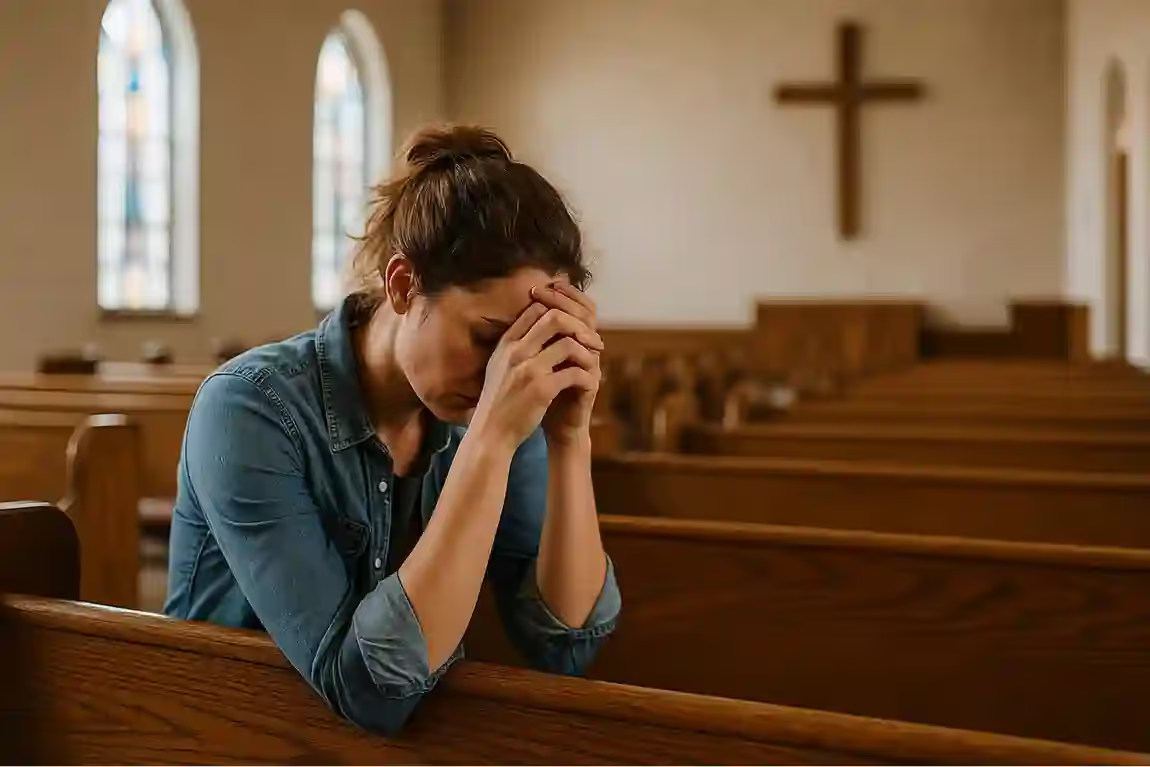
Maria Rodriguez had not set foot in a church building for eighteen months, ever since the Sunday morning when her pastor publicly questioned her commitment to the congregation from the pulpit after she had respectfully expressed concerns about financial transparency in a private leadership meeting the previous week. The public shaming had been devastating enough, but what wounded Maria more deeply was the silence from friends she had served alongside for seven years who either pretended nothing had happened or who quietly distanced themselves rather than risk similar treatment by associating with someone the pastor had marked as problematic. The community that had celebrated her faithfulness, supported her through her divorce, and prayed with her during her mother's cancer treatment suddenly treated her like a stranger whose presence created uncomfortable tension that avoidance seemed to resolve most easily. Maria tried attending a different church several times during the following months, but each visit triggered such intense anxiety and emotional pain that she found herself crying in parking lots before services even began, unable to walk through doors that reminded her too viscerally of the betrayal she had experienced at the hands of people who claimed to represent Christ's love tangibly. She still believed in God intellectually and maintained private prayer and scripture reading at home, yet the thought of entrusting herself to another Christian community felt impossible when the wounds from the previous one remained so fresh and so deep that healing seemed like an unreachable goal that time alone would never accomplish adequately without help she did not know how to find or whether she even wanted seeking honestly.
This article explores how believers can heal from wounds inflicted by church communities and how they can eventually find their way back to fellowship without repeating the patterns that caused hurt originally. Let me walk you through this journey with both honesty about the real pain that church hurt creates and hope about the possibility of experiencing healthy Christian community that actually reflects the love and grace that Christ modeled consistently. I want to help you understand why these wounds hurt so deeply, what healing looks like practically, and how to discern the difference between healthy and unhealthy communities so that you can protect yourself while remaining open to the connection that isolation prevents experiencing fully.
Before we explore how healing happens, I need you to understand something crucial: church hurt is not something you should simply get over quickly or minimize as oversensitivity that maturity would transcend easily. The wounds that Christian communities inflict often cut deeper than other relational injuries because of the unique combination of factors that church contexts create specifically. Let me help you understand why this is the case so that you can stop blaming yourself for struggling to heal as quickly as you think you should have recovered already. Research from Barna Group has consistently shown that relational wounds and disappointment with church community rank among the primary reasons people disengage from faith communities, demonstrating that your experience reflects a widespread pattern rather than an isolated incident that personal weakness explains adequately.
Think about what makes church relationships different from other social connections you maintain throughout life. When you participate in a faith community, you typically invest not just time and energy but also your deepest values, your spiritual vulnerability, your hopes about what community should embody, and often your most personal struggles that you share trusting that these will be held with the care and confidentiality that sacred trust requires protecting carefully. You open parts of yourself that remain hidden in other contexts because you believe that Christian community should be safe space where authenticity receives acceptance rather than judgment, where weakness finds support rather than exploitation, and where mistakes encounter grace rather than condemnation harshly.
Additionally, church hurt often involves people who claim to represent God and who speak with spiritual authority that makes their words carry extra weight beyond normal human disagreement or conflict that resolution might address straightforwardly. When a pastor wounds you, it feels different from when a colleague wounds you because the pastor's role connects their behavior to your understanding of God's character in ways that damage can extend beyond the human relationship alone. When a Christian friend betrays your trust, it hurts more than when a secular friend does the same thing because the Christian friendship was supposed to model Christ's faithful love that abandonment contradicts completely.
Let me help you understand the specific factors that make church hurt so particularly painful by breaking down the unique dynamics that church contexts create distinctively.
Now let me walk you through what healing from church hurt typically looks like, because understanding the process helps you recognize where you are currently and what might come next as recovery progresses naturally. Think of healing not as a linear path with clear stages that you move through sequentially, but rather as a spiral where you may revisit similar emotions and challenges at different levels of depth as you process what happened to you repeatedly over time. The initial phase after church hurt typically involves shock and disbelief, where you cannot quite process that people who claimed to embody Christ's love actually treated you in ways that betrayal characterizes accurately. You might find yourself replaying events repeatedly, trying to understand what happened or what you could have done differently to prevent the hurt that hindsight suggests avoiding impossibly. During this phase, you might also experience intense grief over the loss of community, relationships, and spiritual home that departure required accepting painfully. This grief deserves space and acknowledgment rather than rushing through it toward resolution that premature healing would pretend achieving artificially.
Following the initial shock often comes anger, which represents a healthy and necessary stage rather than something you should suppress or feel guilty about experiencing naturally. The anger might be directed at specific people who wounded you directly, at the system or culture that enabled the hurt, at yourself for not recognizing warning signs earlier, or even at God for allowing this to happen within a community that divine presence should have protected supernaturally. Let me be clear that feeling angry does not indicate spiritual immaturity or lack of forgiveness prematurely. Anger signals that you recognize injustice occurred and that boundaries were violated in ways that wrong characterizes honestly. The key involves processing anger constructively rather than allowing it to consume you destructively through bitterness that healing prevents progressing eventually. Therapy with counselors who understand religious trauma can be invaluable during this stage for processing emotions safely with guidance that wisdom provides professionally. Therapists who specialize in this area understand the unique dynamics of spiritual abuse and can help you work through the layers of pain without dismissing the significance of what you experienced or rushing you toward premature reconciliation with communities that have not earned restored trust through demonstrated change.
For many people healing from significant church hurt, working with a therapist who understands religious trauma proves essential for processing the complex emotions and experiences that such wounds create distinctively. Unlike general relational injuries, church hurt often involves confusion about your own perceptions because spiritual authority figures may have told you that your concerns were invalid, that your pain reflected spiritual immaturity, or that questioning leadership demonstrated lack of faith that repentance should address immediately. This gaslighting creates additional layers of damage that require professional help to untangle carefully. Organizations like Tears of Eden provide resources specifically designed for survivors of spiritual abuse, offering validation that what happened was wrong and guidance for navigating the complex healing journey that such experiences require undertaking thoughtfully.
The therapeutic process helps you rebuild trust in your own perceptions after experiencing environments that systematically undermined your ability to recognize problematic patterns that manipulation obscured intentionally. A skilled therapist can help you distinguish between healthy and unhealthy dynamics in religious settings, process the grief and anger that church hurt creates inevitably, develop boundaries that protect you from repeating harmful patterns, and eventually open yourself to community again when you are ready to take that step cautiously. The investment in therapy represents care for yourself that the church community failed providing adequately, and there is no shame in seeking professional help for wounds that depth makes healing without guidance difficult or impossible practically.
Let me show you one of the clearest markers of healthy church culture, which involves how leadership handles power, money, and decision-making processes transparently. In healthy communities, financial information is available to members without requiring special requests or permissions, leadership decisions include input from diverse voices rather than being made unilaterally by single individuals, and accountability structures exist that allow concerns to be raised without fear of retaliation or punishment. Think about how transparency functions in any healthy relationship, where openness about important matters builds trust while secrecy erodes it progressively. Similarly, churches that have nothing to hide typically make information readily available and welcome questions rather than treating inquiry as threats to authority that submission should silence obediently. When you observe churches that become defensive about transparency requests, that punish people who ask questions, or that demand blind trust in leadership without providing accountability mechanisms, these patterns signal unhealthy dynamics that caution warrants considering seriously before committing deeply. The Gospel Coalition has observed that while we are hurt in relationship, we also find healing in relationship, but the key involves finding communities where healthy dynamics actually exist rather than returning to environments that replicate the patterns causing original harm.
Now let me help you recognize another crucial characteristic of healthy community, which involves how differences of opinion get handled when they arise inevitably among people who think independently. In healthy churches, you can disagree with leadership, question teaching, or express concerns without being labeled as divisive, rebellious, or lacking commitment to the community. Think about how mature friendships allow for disagreement without threatening the relationship fundamentally, because security in mutual love and respect permits differing perspectives to coexist without either person needing to dominate the other into conformity. Similarly, healthy churches recognize that thoughtful believers will sometimes see matters differently and that these differences can actually strengthen community through bringing diverse perspectives that blind spots illuminate helpfully. Conversely, churches that interpret any questioning as attack on authority, that demand uniform agreement on all matters regardless of their theological centrality, or that ostracize people who express dissenting views demonstrate controlling dynamics that freedom contradicts directly. Look for communities where leaders model humility about their own limitations, where multiple voices contribute to decision-making processes, and where disagreement leads to dialogue rather than to dismissal or punishment that control enforces coercively.
Let me show you how healthy communities respond to human weakness and failure differently than unhealthy ones do characteristically. In healthy churches, when people stumble morally, struggle with faith, or make mistakes that consequences produce unavoidably, the default response involves coming alongside with support rather than distancing immediately to protect reputations that association might taint through proximity. Think about how the gospel itself centers on grace extended toward people who fail repeatedly, and how Jesus consistently moved toward broken people rather than away from them to maintain purity standards that compassion would violate supposedly. Similarly, healthy churches embody this grace practically through creating space where people can be honest about struggles without fear that transparency will result in gossip, judgment, or removal from community that conditional acceptance threatens withdrawing suddenly. This does not mean ignoring sin or avoiding accountability appropriately, but rather means that discipline happens within relationship and aims at restoration rather than at punishment or exclusion that separation accomplishes conclusively. When churches respond to failure primarily through shame, rejection, or public humiliation rather than through restorative processes that healing prioritizes consistently, they reveal priorities that gospel contradicts fundamentally through emphasizing performance over grace distortingly.
Now let me help you understand a final crucial marker of healthy church culture, which involves how departures get handled when members decide leaving serves their wellbeing better than staying would currently. In healthy communities, people can leave for various legitimate reasons including relocation, calling to serve elsewhere, needing different teaching emphases, or simply feeling that fit is not right without being treated as traitors who abandoned their spiritual family selfishly. Think about how secure parents allow adult children to leave home and make independent choices without interpreting this separation as rejection of relationship fundamentally. Similarly, healthy churches recognize that God might lead people to different communities at different seasons and that departure does not necessarily indicate spiritual failure or character flaws that explanation requires providing defensively. Conversely, churches that make leaving difficult through guilt manipulation, that vilify people who depart through suggesting their motives were impure or their faith inadequate, or that aggressively pursue departed members to convince them returning represents only acceptable option demonstrate controlling dynamics that freedom contradicts directly and that cultic tendencies reveal concerningly.
Healing from church hurt does not require you to pretend the wound never happened or to minimize the pain it caused. Rather, it involves acknowledging honestly what occurred, processing the emotions it created, learning to trust wisely rather than naively, and eventually opening yourself to community again without repeating patterns that betrayal enabled originally through vulnerability that wisdom now tempers appropriately.
Let me help you understand one of the most delicate balances in healing from church hurt, which involves learning to establish healthy boundaries that protect you from repeating harmful patterns while avoiding hardness that prevents authentic connection from developing naturally. This balance proves challenging because pain naturally creates desire to protect yourself through walls that vulnerability would never risk exposing again after betrayal taught expensive lessons about trusting prematurely. Think about the difference between healthy boundaries and hardened hearts through this comparison that will help you distinguish between protective wisdom and defensive isolation.
Healthy boundaries function like fences that mark property lines while still allowing gates for welcomed visitors to enter when trust develops appropriately over time through demonstrated trustworthiness. You can have boundaries about how much vulnerability you share initially with new church connections, about how quickly you commit to serving in leadership, about what behaviors you will tolerate versus what requires addressing directly, and about when you need stepping back if dynamics feel unhealthy again. These boundaries do not prevent connection but rather create framework for connection to develop safely at pace that wisdom determines appropriate rather than at speed that desperation or obligation would force prematurely.
Conversely, hardened hearts function like fortress walls with no gates, where you decide preemptively that no one can be trusted and that all churches will eventually hurt you the same way the previous one did invariably. This hardness might feel safer initially because it prevents vulnerability that risk creates unavoidably, but it also prevents the genuine connection that isolation denies experiencing fully when walls become so high that intimacy never develops despite longing for community that loneliness intensifies progressively. The key involves recognizing that while your previous church hurt you deeply, not all churches operate the same way unhealthily, and that healing includes developing discernment to distinguish healthy communities from toxic ones rather than avoiding all church involvement indefinitely through assuming uniform danger that actual diversity contradicts significantly.
Knowing when you are ready to try church again matters significantly because attempting re-engagement before adequate healing has occurred can retraumatize rather than restore, while waiting indefinitely allows isolation to solidify into permanent disconnection that never heals fully.
Consider the following indicators that may suggest readiness for cautious re-engagement with church community:
Now let me address a question that many people wrestling with church hurt face, which involves whether you should attempt returning to the church that wounded you or whether leaving permanently represents the wiser choice that health requires selecting ultimately. This decision depends on several factors that only you can evaluate fully given your specific situation's unique details that generalized advice cannot address adequately without knowing circumstances personally.
Consider attempting reconciliation and return if the following conditions exist simultaneously. First, the leadership acknowledges that wrong occurred and takes responsibility for the harm caused rather than defending actions or blaming you for being oversensitive to treatment that appropriateness supposedly characterized actually. Second, genuine changes have been implemented in the systems or culture that enabled the hurt originally rather than merely making apologies verbally without addressing root causes that repetition would allow continuing dangerously. Third, your presence in that community does not trigger ongoing trauma responses that healing prevents progressing when environment constantly reminds you of wounds that distance helps processing more effectively. Fourth, reconciliation feels like something you genuinely want pursuing rather than something you feel obligated attempting because leaving seems like failure or because others pressure you staying despite instincts suggesting departure serves wellbeing better currently.
Conversely, consider walking away permanently if you observe these patterns instead. First, leadership denies wrongdoing, minimizes your concerns, or frames the situation as conflict where both parties share equal blame when actually power dynamics made the hurt asymmetrical significantly. Second, the same behaviors or patterns that caused initial hurt continue occurring without change despite your attempts addressing them constructively through appropriate channels. Third, remaining in that environment impedes your spiritual, emotional, or mental health in ways that cost exceeds any benefit that staying would provide theoretically. Fourth, you feel manipulated or guilted into staying through suggestions that leaving equals abandoning God, betraying community, or demonstrating spiritual immaturity when actually departure represents wisdom that self-protection requires exercising appropriately. Remember that Jesus himself left communities that rejected him rather than forcing connection where receptivity did not exist genuinely, which provides biblical precedent for walking away from unhealthy situations that change refuses happening despite patience extended generously.
Forgiveness represents one of the most challenging aspects of healing from church hurt because religious contexts often misuse forgiveness language in ways that pressure wounded people toward premature reconciliation that genuine healing does not support sustainably. Let me help you understand what forgiveness actually requires and what it does not demand, so that you can pursue authentic healing rather than performing forgiveness that appearance satisfies while pain persists internally unaddressed.
Forgiveness does not require pretending that harm never occurred or minimizing the significance of wounds that damage accurately describes. Authentic forgiveness acknowledges honestly what happened, including the full extent of harm caused and the wrongness of behavior that excuse cannot justify legitimately. Forgiveness does not require trusting the person who hurt you again immediately or ever, because trust must be earned through demonstrated change over time rather than granted simply because forgiveness has been extended verbally. You can forgive someone completely while simultaneously recognizing that wisdom requires keeping appropriate distance from someone whose behavior has proven harmful repeatedly. Forgiveness does not require reconciliation in all cases, particularly when the person who hurt you has not acknowledged wrongdoing, has not changed behavior, or continues representing danger to your wellbeing that protection requires avoiding prudently.
What forgiveness does involve includes releasing the desire for revenge that bitterness feeds destructively, surrendering the person and situation to God's justice rather than carrying the burden of punishment that divine responsibility should handle appropriately, and choosing not to allow what happened to define your identity or control your future indefinitely. This process typically takes significant time and often requires professional support to navigate authentically rather than superficially in ways that appear forgiving while actually suppressing pain that eventually resurfaces more intensely than before when processing remains incomplete fundamentally.
Let me give you practical guidance for how to approach seeking church community again after experiencing hurt, because having concrete steps helps reduce the overwhelming anxiety that this process often creates when attempted without clear framework for proceeding cautiously.
First, start slowly by attending services without committing to membership immediately, giving yourself permission to simply observe for several months how leadership handles various situations including conflict, finances, and differences of opinion that healthy dynamics reveal through consistent patterns over time. Notice whether sermons emphasize control or freedom, whether manipulation tactics appear in communication, and whether vulnerability seems welcomed or exploited when people share struggles publicly or in small groups.
Second, have conversations with multiple people at different levels of involvement including long-term members, recent arrivals, and people who left previously if you can connect with them discreetly without creating drama. Ask about how the church handles disagreement, what happens when people need to leave, whether financial transparency exists, and how leadership responds to concerns raised respectfully. Listen carefully to whether answers sound scripted or authentic, whether people seem free to express nuanced views or whether conformity dominates obviously, and whether your questions trigger defensiveness or welcome as evidence of thoughtful engagement that healthy communities appreciate receiving regularly.
Third, trust your instincts when something feels wrong even if you cannot articulate exactly why discomfort arises initially. Your previous experience gave you education about unhealthy dynamics that pattern recognition now enables identifying more quickly than you could before betrayal taught expensive lessons about trustworthiness that naivety previously prevented evaluating accurately. If you notice red flags like love-bombing during initial visits, pressure to commit quickly before you know the community well, dismissiveness toward your questions or concerns, or language suggesting that questioning equals disloyalty, pay attention to these warnings that wisdom provides protecting you from repeating harmful patterns that healing now equips you recognizing earlier than before when ignorance left you vulnerable unnecessarily.
The character and behavior of church leadership significantly impacts whether community will prove healthy or harmful for your involvement long-term. When evaluating a potential church home, pay attention to how leaders present themselves and interact with congregants observably. Healthy leaders demonstrate humility about their limitations, acknowledge when they do not have answers, welcome input from others, and respond to criticism or questions without becoming defensive or retaliatory. They share credit generously and accept responsibility when things go wrong rather than blaming others for failures that leadership decisions contributed to significantly.
Conversely, concerning patterns include leaders who position themselves as having special access to God that ordinary believers lack, who demand loyalty that questioning threatens immediately, who surround themselves with yes-people who never challenge their decisions, who respond to any criticism with accusations about the questioner's spiritual condition, or who make leaving the community seem spiritually dangerous or disloyal fundamentally. The Center for Action and Contemplation offers resources on healing from spiritual trauma that include guidance on recognizing healthy versus unhealthy spiritual leadership patterns that protection requires identifying accurately before committing to communities where harm might repeat unfortunately.
Maria Rodriguez from our opening story eventually found her way back to Christian community, though the journey took longer than she initially expected and looked different than she had imagined when healing first seemed possible tentatively. She spent the first year after leaving her previous church working with a therapist who specialized in religious trauma to process the betrayal, the grief, and the anger that isolation had intensified through preventing expression that relationship would have facilitated naturally if safe spaces had existed during the initial crisis immediately. Through therapy, Maria learned to distinguish between healthy boundaries and hardened heart, recognizing that her reluctance to trust again made sense given what she had experienced but that permanent isolation would ultimately harm her spiritual wellbeing more than risking connection cautiously with appropriate safeguards protecting her wisely.
After eighteen months, Maria felt ready attempting church attendance again, though she proceeded slowly by visiting several different communities over six months before identifying one where healthy dynamics seemed evident consistently through observation that time allowed accumulating substantially. She noticed that this church made financial information readily available, that leadership welcomed questions rather than becoming defensive when concerns arose, that people spoke freely about struggles without fear that transparency would result in rejection, and that those who left were blessed rather than vilified as departures occurred naturally. Maria attended for four months before joining a small group, then participated another six months before accepting a minor serving role that commitment required assuming cautiously. Throughout this process, she maintained boundaries about how much vulnerability she shared initially and about how quickly she deepened involvement despite enthusiasm that tempted rushing into connection prematurely before trust developed appropriately through demonstrated trustworthiness consistently.
Three years after the original church hurt, Maria experienced genuine Christian community again in ways that her previous church had claimed embodying theoretically yet had failed demonstrating practically when conflicts revealed true character that crises expose inevitably. She had learned that healing does not mean pretending the wound never happened or returning to naive trust that wisdom would temper now through experience that discernment sharpened significantly. Rather, healing meant acknowledging honestly what occurred, processing the emotions it created, learning to trust wisely through establishing appropriate boundaries, and eventually opening herself to community again without repeating patterns that previous situation enabled through vulnerability that caution now protected appropriately. The new church was not perfect, and Maria still sometimes felt anxious when conflicts arose reminding her of previous trauma distantly. However, she watched this community handle difficulties with grace, transparency, and genuine care for all parties involved rather than with the control and manipulation that her previous church had employed harmfully. Maria learned that church hurt, while devastating initially, can actually produce wisdom about healthy community that naivety never possesses and that this wisdom enables participating in fellowship more deeply than before when discernment now recognizes and protects against dynamics that damage would create if boundaries did not prevent repetition that awareness now guards against vigilantly yet hopefully simultaneously.
If you are reading this article while still in the midst of pain, still unable to imagine returning to church, still wondering whether healing will ever feel possible genuinely, let me offer you encouragement that your current season does not represent your permanent destination that stagnation would make unchanging indefinitely. Many believers have walked through similar wilderness experiences and have eventually found their way to communities that embodied what church was always supposed to represent authentically. Your path forward may take longer than you wish and may look different than you expect, but movement toward healing remains possible even when current circumstances suggest otherwise discouraging repeatedly.
The God who sees you in your pain has not abandoned you despite how representatives of his church may have behaved toward you harmfully. Your worth does not depend on what any human community says about you, and your relationship with God remains accessible through prayer and scripture even while church involvement feels impossible currently. The Gospel Coalition's podcast discussion on church hurt features Jackie Hill Perry noting that what healed her from church hurt was ultimately the church itself, suggesting that the community that wounded you is not identical to the community that may eventually participate in your healing through different expressions of the body of Christ that health characterizes genuinely. Take the time you need, pursue the professional help that deep wounds require addressing thoroughly, and trust that the God who began good work in you will complete it faithfully even when the path forward remains unclear temporarily and the destination feels impossibly distant presently.
NOVEMBER 25, 2025
NOVEMBER 25, 2025
NOVEMBER 25, 2025
NOVEMBER 24, 2025
NOVEMBER 24, 2025