

Why Christian Community Matters More Than Ever
NOVEMBER 25, 2025

Sarah Mitchell felt completely inadequate every time her church made announcements seeking volunteers for various ministries and service opportunities that capability seemed to require possessing gifts she did not have naturally. She was not a gifted teacher who could lead Bible studies confidently, not musically talented enough to join the worship team despite enjoying singing privately, not particularly skilled with children to volunteer for nursery or Sunday school, not organizationally gifted enough to coordinate events that logistics demanded managing competently, and certainly not comfortable with evangelism that boldness would require demonstrating publicly. Sarah had recently moved to the area after accepting a new job that already demanded long hours that exhaustion created consistently, leaving her feeling like she had nothing substantial to offer a church community beyond passive attendance on Sunday mornings when work schedules allowed showing up occasionally. She watched other people serve in visible, important-seeming roles while feeling like her own contribution amounted to essentially nothing beyond occupying a seat and putting money in the offering plate that significance lacked compared to actual service that impact produced tangibly.
What Sarah did not realize was that the small, almost invisible things she was already doing without recognizing them as meaningful service were actually building community in ways that flashier contributions could never replicate as effectively precisely because consistency and presence matter more than intensity or visibility ultimately. She arrived ten minutes early most Sundays and chatted with whoever was setting up chairs, noticing and commenting on their work with genuine appreciation that encouragement provided naturally. She remembered names and asked follow-up questions about situations people had mentioned in passing during previous conversations, demonstrating that she actually listened rather than merely making small talk mechanically. She stayed after services to help stack chairs and clean up rather than rushing out immediately when dismissal happened, creating informal time for connection that structured programming never accommodated naturally. These small acts felt inconsequential to Sarah because they did not require special gifts or significant time commitments that real service supposedly demanded demonstrating visibly.
This article explores how small, consistent acts of showing up and serving in ordinary ways build strong church communities more effectively than occasional grand gestures or highly visible leadership roles that intensity emphasizes over consistency. Let me help you understand why these small acts matter far more than you probably realize, how simple presence creates profound impact when sustained faithfully over time, and why you likely already possess everything necessary for meaningful service regardless of whether you feel particularly gifted or capable in ways that church culture often celebrates most loudly.
Before I show you specific small acts that build community powerfully, I need to help you understand why church culture often makes people feel inadequate about service through overemphasizing visible leadership roles while undervaluing the ordinary faithfulness that community actually depends upon most fundamentally. Think about how we typically talk about service in church contexts, where announcements highlight needs for teachers, worship leaders, event coordinators, and other positions that specific skills seem to require possessing naturally or developing extensively before contributing meaningfully. This emphasis creates the impression that real service involves taking on significant responsibilities that time commitments demand sustaining regularly and that special abilities enable performing competently in ways that average people cannot replicate easily.
However, this understanding misses what actually holds communities together most reliably across time, which involves countless small acts of presence, attention, and care that ordinary people perform consistently without fanfare or recognition that visibility would provide publicly. Let me help you see service differently through explaining what research about community cohesion reveals consistently across various contexts beyond churches specifically. Studies of strong communities show that connection builds primarily through repeated small interactions rather than through occasional intense experiences that memory emphasizes disproportionately despite their relative rarity. Think about how you become close to people in any context, whether at work, in neighborhoods, or through shared activities. The friendships that last typically develop not through dramatic bonding experiences primarily but rather through accumulated small moments of showing up consistently, paying attention genuinely, and demonstrating care tangibly in ordinary ways that reliability establishes progressively.
You become friends with the coworker who regularly asks how your day is going and actually listens to the answer, not primarily with the coworker who organized one memorable team-building event annually. Similarly, church community strengthens most through the accumulated effect of people consistently showing up, noticing others, offering help with small tasks, and creating space for informal connection rather than through impressive programs alone that organization requires coordinating extensively. The spiritual gift of serving encompasses far more than visible leadership roles and includes the countless ways ordinary believers meet needs through consistent presence and attention.
Let me explain the mathematics of community building that will help you understand why consistency in small things matters more than occasional intensity in big things for creating strong relational fabric. Think about it this way: if you greet someone warmly after church fifty-two Sundays per year, that creates fifty-two opportunities for connection, for noticing how they are doing, for them to feel seen and valued by someone who remembers their name and cares about their wellbeing genuinely. Conversely, if you organize one impressive annual event that brings the whole church together memorably, that creates one significant experience but only one touchpoint for building actual relationship with individuals personally. The cumulative effect of fifty-two small interactions builds far more relational capital than one large event does, because relationship develops through repetition and consistency that trust establishes progressively rather than through intensity alone that memory emphasizes selectively.
Additionally, small acts are accessible to everyone regardless of spiritual gifts, life season, energy levels, or available time commitments, which means community building can distribute across many people rather than depending on a few highly capable individuals whose burnout would leave gaps that no one else could fill adequately when exhaustion forces withdrawal temporarily or permanently. The New Testament contains over fifty 'one another' commands that require real people having real interactions with other real people, demonstrating that biblical community depends not on programs or impressive events but on believers consistently relating to one another in love.
Now let me show you the deeper theological truth that makes simple presence and small acts more significant than you probably recognize currently. Think about how God chooses to relate to humanity throughout scripture, where divine presence itself represents the fundamental gift that all other blessings flow from naturally. When God promises "I will be with you" to Abraham, Moses, Joshua, and countless others, this promise of presence constitutes the most important commitment that God makes because divine accompaniment matters more than any specific help that presence might provide instrumentally on particular occasions. The incarnation itself demonstrates this theology of presence powerfully, where God does not rescue humanity from a distance through purely supernatural intervention but rather enters into human existence fully through taking on flesh and living among us physically.
Understanding incarnational ministry helps us see that Jesus models ministry involving extraordinary moments like healing miracles certainly, but consisting primarily of ordinary presence with people through sharing meals, walking together, having conversations, and simply being available when needs arise naturally during daily life that proximity makes visible immediately. Think about how much of Jesus's recorded ministry involves not dramatic teaching or miraculous signs but rather simply being present with people who society marginalized, eating with tax collectors and sinners, allowing children to approach him when disciples wanted protecting him from interruption, and noticing individuals like Zacchaeus in trees or women at wells when others would have passed by without seeing them personally.
When you show up consistently to church gatherings, you embody this same theology of presence through making yourself available for connection, for noticing needs, for offering help that visibility enables providing naturally, and for demonstrating that people matter enough to warrant your time and attention regularly. This presence itself constitutes service that value transcends any specific tasks you might perform while present, because your availability creates opportunities for relationship, for encouragement, for practical assistance, and for the countless small ways that care expresses itself when people actually know each other beyond superficial acquaintance that distance maintains inevitably.
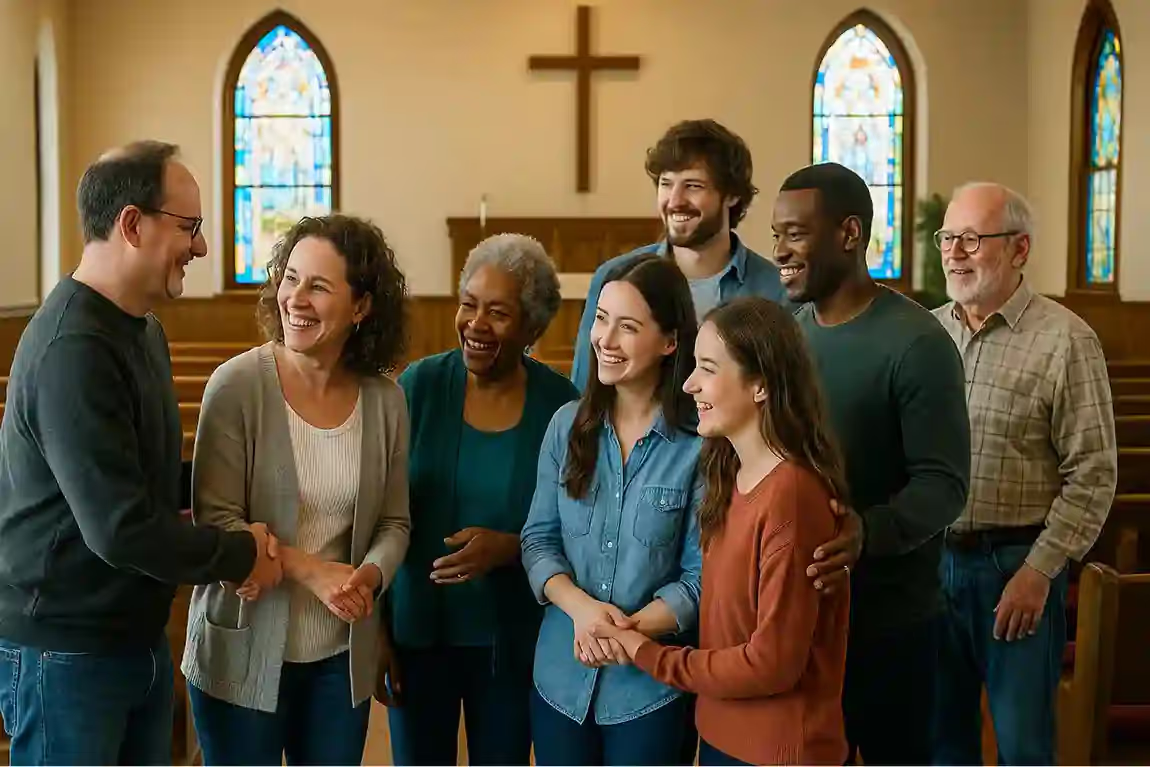
Let me explain why the margins around formal gatherings often matter more for community building than the programmed time itself, because informal interaction creates space for relationship that structured activities cannot accommodate naturally despite their importance for other purposes legitimately. When you arrive ten or fifteen minutes before services begin, you create opportunity for conversation with people who are setting up, for greeting others as they arrive, and for the kind of relaxed interaction that rushed arrivals prevent experiencing fully. Similarly, when you stay after dismissal to help with cleanup or simply to visit with people without watching the clock anxiously, you signal that relationship matters more than efficiency and that you value connection enough to sacrifice the convenience that immediate departure would provide selfishly. These margins feel insignificant because nothing particularly dramatic happens during them typically, yet they provide the unstructured time where people actually get to know each other beyond the surface-level interactions that programmed activities usually accommodate only partially. The biblical command to meet together and encourage one another finds its fullest expression not merely in formal worship services but in the relational interactions that happen before and after when believers actually connect with one another personally.
Now let me show you why this simple act carries more weight than you might realize initially. Think about how you feel when someone remembers your name after meeting you only once or twice, versus how you feel when you have to reintroduce yourself repeatedly to the same person who never seems to retain who you are despite multiple encounters. The first experience makes you feel noticed, valued, and like you matter enough to remember specifically. The second experience makes you feel invisible, interchangeable, and like you do not register as significant enough to warrant the mental effort that remembering requires investing minimally. When you make the effort to learn and use people's names consistently, you communicate that they matter individually rather than merely filling slots in an anonymous crowd that attendance counts track without recognizing persons uniquely. Churches that excel at welcoming newcomers understand that remembering names represents one of the most powerful tools for helping visitors feel they belong.
Let me explain how this practice demonstrates care more powerfully than almost any other single behavior you can adopt consistently. When someone mentions during casual conversation that they have a job interview coming up, that their child is struggling with something specific, that they are dealing with a difficult situation at work, or any other detail about their life currently, most people respond politely in the moment then forget completely by the next time they see that person. However, when you remember these details and ask about them the following week, you communicate that you actually listened rather than merely making conversation mechanically, that their concerns matter enough to you that remembering warranted mental effort, and that you care about them specifically rather than merely being generically friendly in ways that depth never develops beyond superficial pleasantness. This follow-up transforms casual acquaintance into actual friendship progressively through demonstrating attention and care that investment signals authentically.
Now let me show you how acknowledging others' service creates positive culture that multiplication enables spreading naturally. Think about how people who serve in unglamorous roles like setting up chairs, preparing communion elements, cleaning bathrooms, maintaining buildings, or handling technical equipment typically receive little recognition despite their contributions making everything else possible practically. When you notice these contributions and express genuine appreciation specifically for what people do rather than offering generic thanks mechanically, you accomplish several important things simultaneously. First, you encourage people who might otherwise feel taken for granted to continue serving faithfully despite lack of visibility that recognition would provide publicly. Second, you model the kind of attentiveness to others that community building requires practicing consistently. Third, you help shift culture away from celebrity-focused appreciation toward valuing all contributions equally regardless of visibility that some roles produce more obviously than others do naturally. Effective volunteer appreciation recognizes that those who serve behind the scenes week after week deserve acknowledgment for contributions that everyone else depends upon constantly.
Let me help you understand why this simple choice carries such significance for inclusion that belonging requires experiencing tangibly. Most people naturally gravitate toward sitting with friends or family members they came with, which makes complete sense from comfort perspective but which also means that newcomers or people attending alone often sit isolated unless someone intentionally chooses otherwise despite the easier path that habit would follow automatically. When you notice someone sitting alone and choose to introduce yourself and sit with them, you transform their experience from feeling like an outsider observing a community they do not belong to into feeling welcomed into relationship that invitation extended personally. This act requires minimal effort from you beyond temporary discomfort of initiating conversation with someone unfamiliar, yet it can make the difference between someone returning the following week versus never coming back because feeling invisible convinced them that connection would never develop despite trying initially.
The biblical example of Tabitha (Dorcas) in the book of Acts provides a powerful model of someone who noticed needs and met them without waiting for formal requests or organizational structures to facilitate her service. She made clothing for widows and always did good and helped those in need, seeing what people required and providing it practically. When you notice that someone struggles carrying items to their car, that chairs need stacking after service, that the hospitality area needs restocking, or that any other practical need exists, and you simply step in to help without waiting to be asked formally, you demonstrate the kind of proactive care that community requires from many members to function healthily. This pattern of noticing and acting creates culture where needs get met naturally because enough people pay attention and respond rather than assuming someone else will handle everything eventually.
Everyone has a story worth hearing, yet many people feel that no one cares enough to ask or listen. When you take time to learn about someone's background, their journey to faith, their family situation, their work life, and their hopes and struggles, you communicate value that affirmation provides deeply. This interest must be genuine rather than performed, which means actually caring about what people share rather than merely asking questions as social ritual that listening never follows through completing. People can detect the difference between someone who asks because they want to appear friendly versus someone who asks because they genuinely want to know, and authentic interest creates connection that superficial inquiry never establishes effectively. The practice of really listening reflects the kind of mutual care that Scripture describes when it speaks of believers as members of one body who have equal concern for each other.
When you are talking with friends after service and notice someone standing nearby looking uncertain about how to join in, you can open the circle to include them through introducing them to others and creating space for their participation. Similarly, when you plan social gatherings outside formal church activities, you can intentionally include people who might not otherwise receive invitations, particularly those who are newer to the community or who seem to struggle finding connections. This inclusive practice reflects the hospitality that Scripture emphasizes repeatedly, where welcoming others demonstrates love that actions express concretely rather than merely feelings that remain internal. The consistent practice of including others creates networks of relationship that extend beyond any single person's efforts and that build the interconnected community where everyone knows multiple people rather than remaining connected only to one small circle.
When you learn about someone's struggles, joys, concerns, or upcoming events, and you actually pray for them specifically, you participate in their lives spiritually in ways that matter eternally. However, letting people know that you have prayed for them adds an additional dimension of encouragement that knowledge provides tangibly. A simple note, text message, or verbal acknowledgment that you have been praying about the situation they shared communicates care that action demonstrates beyond mere good intentions. This practice requires paying attention to what people share, remembering their concerns long enough to actually pray about them, and then following up to let them know you did. The cumulative effect of many people praying specifically for one another creates spiritual support that isolation never provides and that formal prayer chains cannot replicate because it emerges from actual relationship rather than organizational process alone.
Most people receive far less encouragement than they need and far less than others could provide if they simply paid attention and spoke up. When you notice something positive about someone, whether their kindness to a child, their faithfulness in serving, their growth in some area, their handling of a difficult situation, or any other praiseworthy quality, telling them specifically what you observed and appreciated provides encouragement that soul feeds deeply. Generic compliments like "good job" or "you're great" carry less weight than specific observations like "I noticed how patiently you helped that confused visitor find the nursery" or "I've watched you greet people consistently for months and wanted you to know it makes a real difference." The body of Christ functions properly when each member contributes their part, and encouragement helps people recognize that their contributions matter even when they feel insignificant.
Community is not built primarily through impressive programs or extraordinary events that require significant resources and specialized skills. Rather, it grows through the accumulated effect of ordinary people consistently showing up, paying attention to each other, and offering help with small tasks that presence makes visible naturally when availability creates opportunities for connection that distance would prevent experiencing fully.
Let me address the common obstacles that prevent people from serving through consistent presence despite genuine desire to contribute meaningfully to community. The first major obstacle involves feeling like you have nothing significant to offer because you lack visible gifts or available time that real service supposedly requires possessing abundantly. I hope the examples I have already provided help you see that this belief reflects misunderstanding about what community actually needs most fundamentally, which involves presence and attention more than specialized skills or extensive time commitments that intensity emphasizes disproportionately. Think about the small acts I described earlier, where arriving ten minutes early, remembering names, asking follow-up questions, expressing appreciation, and sitting with someone new each require minimal time and zero special abilities beyond basic human kindness that everyone possesses inherently.
These acts fit into life margins without requiring major schedule reorganization or energy reserves that depletion has exhausted already. You do not need to take on additional responsibilities to serve meaningfully through these practices, because they happen naturally during time you already spend at church gatherings anyway when attention directs itself outward toward others rather than remaining focused inward on your own experience exclusively. The second obstacle involves consistency challenges that busy modern life creates through unpredictable schedules, competing commitments, and exhaustion that makes even showing up physically feel difficult some weeks despite best intentions. Let me acknowledge that this struggle is real and that perfection is neither possible nor required for meaningful contribution.
Think about consistency not as never missing versus always attending, but rather as a general pattern where people can depend on you being present most of the time even when circumstances occasionally prevent attendance inevitably. If you attend seventy-five percent of the time and engage in the small acts I described when present, you build far more community than someone who attends one hundred percent but remains relationally disengaged through focusing exclusively on their own experience without noticing or connecting with others genuinely. The key involves making presence and attention habitual during the times you do attend rather than treating church as passive entertainment that consumption defines without participation that relationship requires initiating actively.
Let me address the discouragement that often arises when small acts do not produce visible results that impact would confirm immediately through dramatic changes that significance demonstrates obviously. You might remember someone's name and ask them how their week went, only to receive a brief, polite response that depth never develops beyond initially. You might stay after to help clean up, only to find that few others join you consistently despite hoping your example would inspire broader participation eventually. You might intentionally sit with newcomers repeatedly, only to watch many of them never return after one or two visits despite your welcoming efforts that retention should have produced logically.
Here is what I want you to understand about why faithfulness in small things matters even when results remain invisible to you personally. First, you never know which small act might make crucial difference for someone at a moment when they need it most desperately. The person you greeted warmly might have been on the verge of giving up on church entirely, and your simple acknowledgment reminded them that they matter and belong here genuinely. The newcomer you sat with might not have returned to your church specifically but might have felt encouraged to try another congregation rather than abandoning church altogether because your kindness showed that welcoming communities do exist somewhere even if perfect fit remained elusive initially.
Second, the cumulative effect of many people practicing small acts creates culture that no individual contribution produces alone but that collective faithfulness generates progressively through consistency that trust establishes gradually. Think about it this way: if fifty people in a congregation each make small efforts toward connection and service consistently, that creates an environment where newcomers feel noticed quickly, where needs get met naturally through people who pay attention and offer help, and where relationships develop easily because multiple people initiate rather than waiting passively for others to approach them first. However, this culture only emerges when enough people practice these behaviors consistently, which means your individual contribution matters not primarily through isolated impact but through participating in collective pattern that community creates collectively when many individuals choose faithfulness in small things simultaneously over time that accumulation makes powerful eventually.
Now let me help you understand the long-term transformation that occurs when communities value and practice consistent small acts of presence and service faithfully. Think about how culture shifts happen not through dramatic interventions primarily but through gradual change in what behaviors people observe, model, and reward consistently until new patterns become normal expectations that everyone participates in naturally without conscious thought required continually. When a few people begin practicing the small acts I described earlier, they make these behaviors visible and accessible to others who might never have considered that such simple actions constitute meaningful service that contribution demonstrates adequately.
A newcomer observes someone arriving early to set up chairs and chat with others, then begins arriving early themselves the following month after recognizing that this margin time provides valuable connection opportunities that rushing in late prevents experiencing naturally. Someone notices how you remember names and ask follow-up questions, then starts practicing the same intentional attention because your modeling showed that this behavior is valued and possible rather than requiring exceptional memory that only gifted people possess uniquely. Over months and years, these practices multiply across the community until they become the norm rather than the exception, transforming church culture from one where people attend passively to one where people participate actively in building relationship through countless small interactions that presence enables naturally.
Additionally, when leaders acknowledge and celebrate these small acts explicitly through mentioning them in announcements or through personal expressions of appreciation for people who serve in less visible ways consistently, they signal what the community actually values beyond the visible leadership roles that recognition usually highlights exclusively. This explicit acknowledgment gives permission for people who feel inadequate about their capacity to serve in traditional ways to recognize that their small, consistent contributions matter just as much for community health as the more visible ministries do undeniably. Research on organizational culture from sources like church leadership resources consistently shows that what leaders notice and celebrate shapes what behaviors members engage in naturally through following cues about what actually matters beyond stated values alone.
Scripture provides abundant foundation for understanding why small, consistent acts of service matter for building the kind of community God intends His people to experience. The one another commands scattered throughout the New Testament describe relationship patterns that require regular interaction to fulfill faithfully. Commands to love one another, encourage one another, bear one another's burdens, serve one another, and care for one another all presuppose ongoing relationship rather than occasional contact. You cannot obey these commands toward people you do not know, people whose situations you remain unaware of, or people you interact with only during formal services without margin for actual conversation. The infrastructure for fulfilling these commands involves the small acts of showing up, paying attention, and connecting personally that make relationship possible.
The imagery of the church as the body of Christ in 1 Corinthians 12 emphasizes that every member matters and that no part can say to another "I don't need you." This passage explicitly challenges the assumption that some roles matter more than others, comparing less visible members to the parts of a human body that seem less honorable yet prove indispensable. The eye cannot function without the rest of the body, and the visible, celebrated parts cannot operate independently of the unseen supporting members. When you practice small acts of presence and service consistently, you function as an essential member of the body even without holding titled positions or performing visible roles that attention gravitates toward naturally.
The exhortation in Hebrews to not forsake assembling together but to encourage one another as you see the day approaching connects regular gathering with mutual encouragement. The purpose of meeting together extends beyond receiving teaching or participating in worship to include the relational encouragement that happens when believers interact consistently. This encouragement cannot happen if people rush in late and leave immediately, if they interact only with existing friends, or if they remain passive observers of community rather than active participants in building it. The small acts of arriving early, staying late, connecting with others, and offering encouragement fulfill the biblical purpose of gathering in ways that formal programming alone cannot accomplish.

The beauty of small acts lies in their adaptability to different life circumstances that capacity fluctuates through considerably. A young parent exhausted from sleepless nights with an infant cannot take on major volunteer commitments, but they can still greet people warmly, remember names, and express appreciation for others' service during the limited time they manage to attend gatherings. A professional working demanding hours cannot lead a weekly small group, but they can arrive a few minutes early on Sundays to connect with others and offer encouraging words to those serving. A retired person with more available time can leverage that flexibility to practice small acts more extensively while also taking on larger responsibilities that schedule permits accommodating readily. The key involves identifying which small acts fit your current season rather than concluding that you cannot serve meaningfully because traditional volunteer roles exceed your capacity temporarily or permanently.
For those new to a church community, small acts provide accessible entry points for building relationship before committing to formal ministry involvement. Rather than waiting until you know people well enough to serve alongside them in programs, you can begin building connection immediately through the practices I have described. For long-term members who feel stuck in routine attendance without experiencing deep community, recommitting to small acts of presence and attention can transform the same gatherings you have attended for years into rich relational experiences through simply changing what you do during the time you already spend at church. For church leaders concerned about community health, modeling and celebrating small acts creates culture where everyone participates in building community rather than depending on programs and volunteers alone.
Sarah Mitchell from our opening story eventually discovered that the small acts she had been practicing unconsciously were actually building community far more effectively than she realized initially through their seeming insignificance. The shift in her understanding began when a newcomer approached her one Sunday to thank her specifically for remembering his name after only meeting once and for asking how his first week at his new job had gone when she saw him the following Sunday. He explained that he had visited three different churches before finding this one, and that Sarah's simple attentiveness had made him feel noticed and valued in ways that generic friendliness at other churches had never accomplished despite their welcoming statements that actions contradicted through impersonal interaction that anonymity maintained effectively.
This conversation opened Sarah's eyes to recognizing that the small things she did naturally without thinking they mattered were actually what many people needed most from church community beyond impressive programs or dynamic teaching alone. She started paying more attention to the people who served behind the scenes setting up, cleaning, preparing, and maintaining in ways that visibility never highlighted publicly, and she made point of expressing appreciation specifically for their contributions that everything else depended upon practically. She began intentionally sitting with different people each week rather than gravitating toward the same friends repeatedly, which expanded her own relational network while making more people feel included personally rather than observing community from outside positions permanently.
Two years after beginning to recognize the significance of small acts, Sarah noticed that church culture had shifted considerably from when she first arrived feeling inadequate about her capacity to contribute meaningfully. More people arrived early and stayed late, creating rich informal time for connection that programs alone never provided adequately. People knew each other's names and actually asked about each other's lives with genuine interest rather than making superficial small talk mechanically. Newcomers felt welcomed quickly because multiple people noticed them and initiated conversation rather than waiting passively for new people to insert themselves into established groups that cliquishness maintained unintentionally. Sarah realized that this transformation had not resulted from any single dramatic intervention or impressive new program, but rather from the accumulated effect of many people practicing small acts of presence and service consistently over time until these behaviors became cultural norms that expectations reinforced naturally.
If you have been feeling inadequate about your capacity to serve because visible gifts or leadership roles do not match your abilities or availability, let me encourage you to embrace the significance of small acts as legitimate and impactful service. This week, you can choose one or two of the practices I described and commit to implementing them consistently. Perhaps you will arrive ten minutes early next Sunday and intentionally greet people you do not know well, asking their names and showing genuine interest in who they are. Perhaps you will stay after service to help with cleanup while conversing with whoever else remains rather than rushing out immediately when dismissal happens.
Perhaps you will notice someone serving in an unglamorous role and express specific appreciation for their contribution that visibility rarely acknowledges publicly. Perhaps you will remember someone's name from last week and follow up on something they mentioned in conversation, demonstrating that you actually listened and cared enough to remember. None of these acts require special abilities, extensive time, or organizational approval. They simply require choosing to direct attention outward toward others rather than remaining focused inward on your own experience exclusively. Start with one practice this week, then add others gradually as habits form and capacity expands through the encouragement that impact provides when you begin noticing how your small acts affect others positively.
The gift of showing up involves more than physical presence, though presence provides the foundation that everything else builds upon necessarily. It involves choosing to use the time you spend at church gatherings for connection and service rather than mere consumption, for building relationship rather than merely receiving whatever the service provides professionally. It involves recognizing that what you do in the margins, before and after the formal program, often matters more for community than what happens during the structured time that organization controls completely. It involves understanding that consistency over years creates impact that no single dramatic gesture can replicate regardless of how impressive it appears in the moment.
She learned that she had not been inadequate for lacking visible gifts or leadership capacity, but rather that her consistent showing up and paying attention to others had been precisely the kind of service that community building required most fundamentally beyond the flashy contributions that attention gravitates toward celebrating disproportionately despite their relative insufficiency for creating the relational fabric that strong communities depend upon sustaining across years and decades faithfully. May you discover the same truth about your own capacity to serve, and may your small acts of showing up contribute to building the kind of community where everyone feels seen, known, valued, and loved as the body of Christ functions together in mutual care and support.
NOVEMBER 25, 2025
NOVEMBER 25, 2025
NOVEMBER 25, 2025
NOVEMBER 24, 2025
NOVEMBER 24, 2025