

How to Study the Bible Effectively: A Pentecostal Approach
NOVEMBER 25, 2025

The Old Testament is far more than a historical prelude to the New Testament. It contains a rich tapestry of messianic prophecies, symbolic patterns, and theological themes that point directly to Jesus Christ. From direct predictions to typological foreshadowing, the Hebrew Scriptures reveal the foundation of biblical prophecy about Jesus and the unified storyline of redemption that stretches from Genesis to Revelation.
This guide explores the major categories of prophecy, explains how Christ is foreshadowed in the Old Testament, and highlights the importance of these promises for understanding biblical theology centered on Christ. We will look at direct predictions, patterns and types, key texts often quoted in the New Testament, and the way early Christians understood these prophecies as fulfilled in Jesus.
For readers who are exploring the topic for the first time, this article aims to offer a clear, structured overview. For seasoned students of Scripture, it will provide a framework for connecting familiar passages and seeing how they contribute to a coherent vision of God’s plan in history.
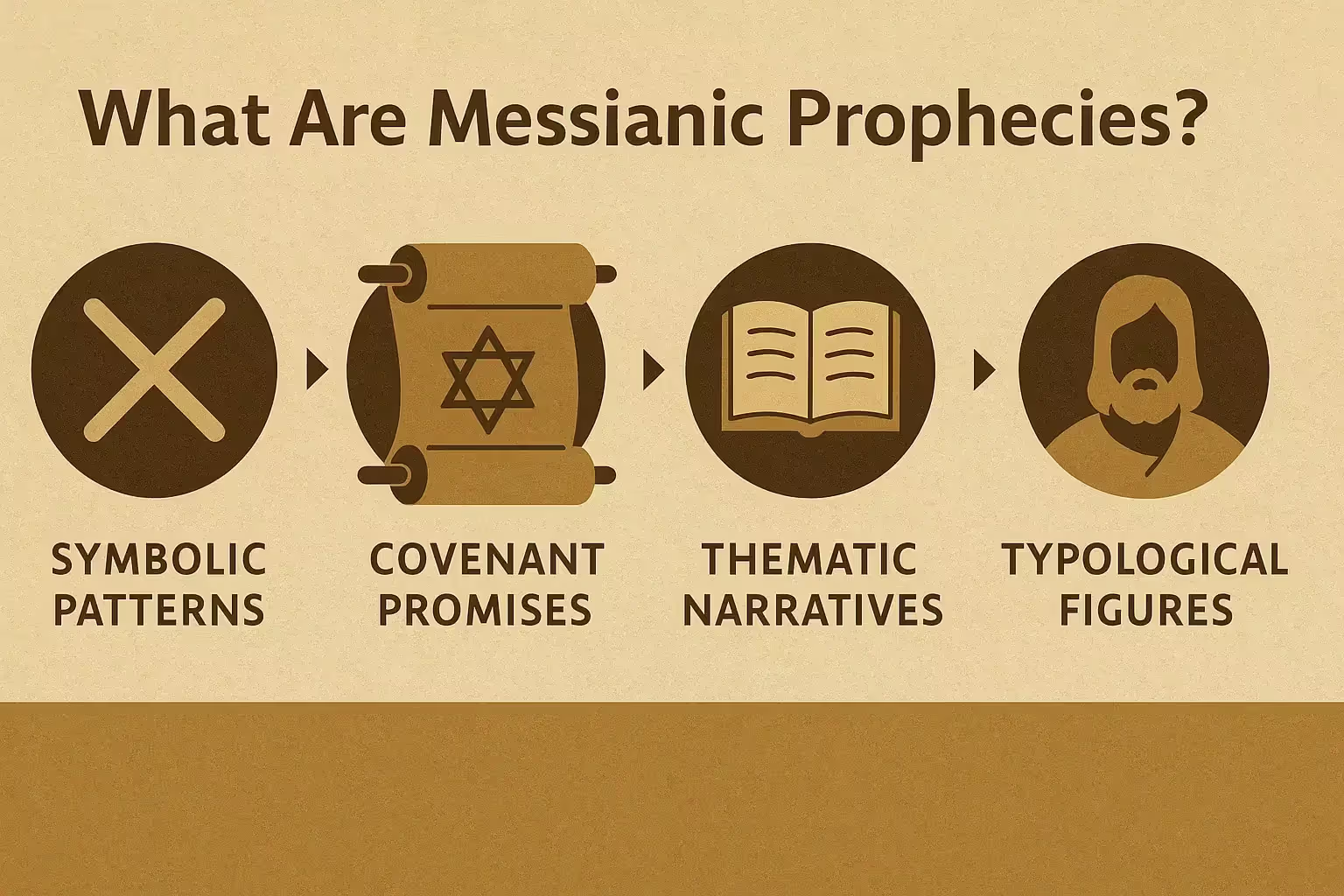
Messianic prophecies are prophecies in the Old Testament that predict or anticipate the coming Messiah—His birth, life, mission, suffering, resurrection, kingship, and ultimate role in God’s redemptive plan. They form a vital bridge between the covenants and reveal God’s long-term purpose for salvation and the restoration of creation.
These prophecies appear in different literary forms: legal codes, wisdom sayings, psalms, prophetic oracles, and historical narratives. Sometimes the Messianic expectation is explicit; other times it is woven into the fabric of the story through patterns and images that later find their fullest meaning in Christ.
These prophecies are not limited to explicit predictions. They also include:
Understanding these elements helps us engage with biblical prophecy about Jesus more deeply. Instead of seeing prophecy as a scattered list of isolated verses, we begin to recognize a unified, Christ-centered story.
For Christians, the Old Testament is filled with portraits of Jesus in the Old Testament—not merely as a theological reading imposed backward, but as a consistent development of God’s plan that culminates in the New Testament. The same God who called Abraham, formed Israel, and spoke through the prophets is the God who sent His Son in the fullness of time.
Jesus Himself confirmed this perspective. He rebuked the religious leaders of His day for missing the central figure to whom their Scriptures pointed. He said, “These are the Scriptures that testify about Me” (John 5:39), and after His resurrection He explained to His disciples that “everything written about Me in the Law of Moses, the Prophets, and the Psalms must be fulfilled” (Luke 24:44). For Jesus, the entire canon of the Hebrew Bible ultimately converges on His person and work.
The Old Testament provides the foundation, expectation, and framework for the identity of Jesus as Messiah. Without it, terms like “Christ,” “Son of David,” “Lamb of God,” or “New Covenant” would float free of their historical and theological anchors. Messianic prophecies give these titles substance, context, and depth.
To understand Old Testament fulfillment, scholars typically distinguish two major categories: direct prophecies and typological prophecies. Both kinds play a crucial role in how the New Testament understands Jesus’ mission and identity, and together they form a multi-layered witness to Christ.
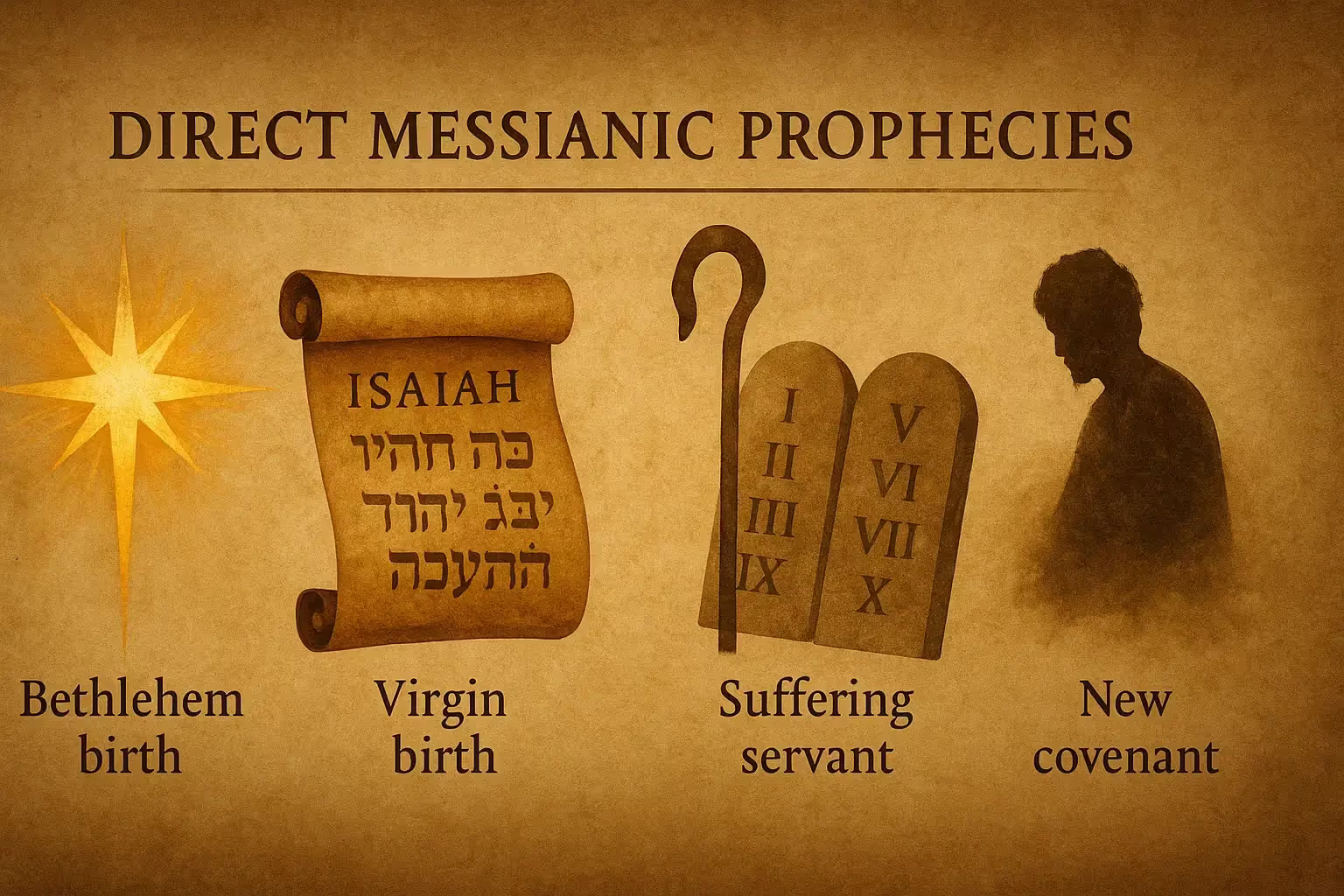
Direct messianic prophecies explicitly predict events or characteristics later fulfilled by Jesus. These are often the passages most people think of first when discussing the prophecies of Jesus in the Old Testament.
These direct prophecies give us explicit statements about the Messiah’s origin, character, and mission. They are frequently quoted in the New Testament as evidence that Jesus is the expected Christ.
Typology in Scripture involves persons, events, institutions, or symbols that foreshadow Christ. They are not predictions in the usual verbal sense but divinely intended patterns that anticipate Jesus. These patterns become clearer as the story progresses and reach their climax in the life, death, and resurrection of Christ.
Recognizing typology in Scripture helps us see how God works consistently over time. Certain roles (prophet, priest, king), objects (sacrifices, temple, altar), and events (exodus, exile, return) become recurring previews of a greater, final fulfillment in Christ. Through these patterns, we see Christ foreshadowed in the Old Testament again and again, long before He appears in history.
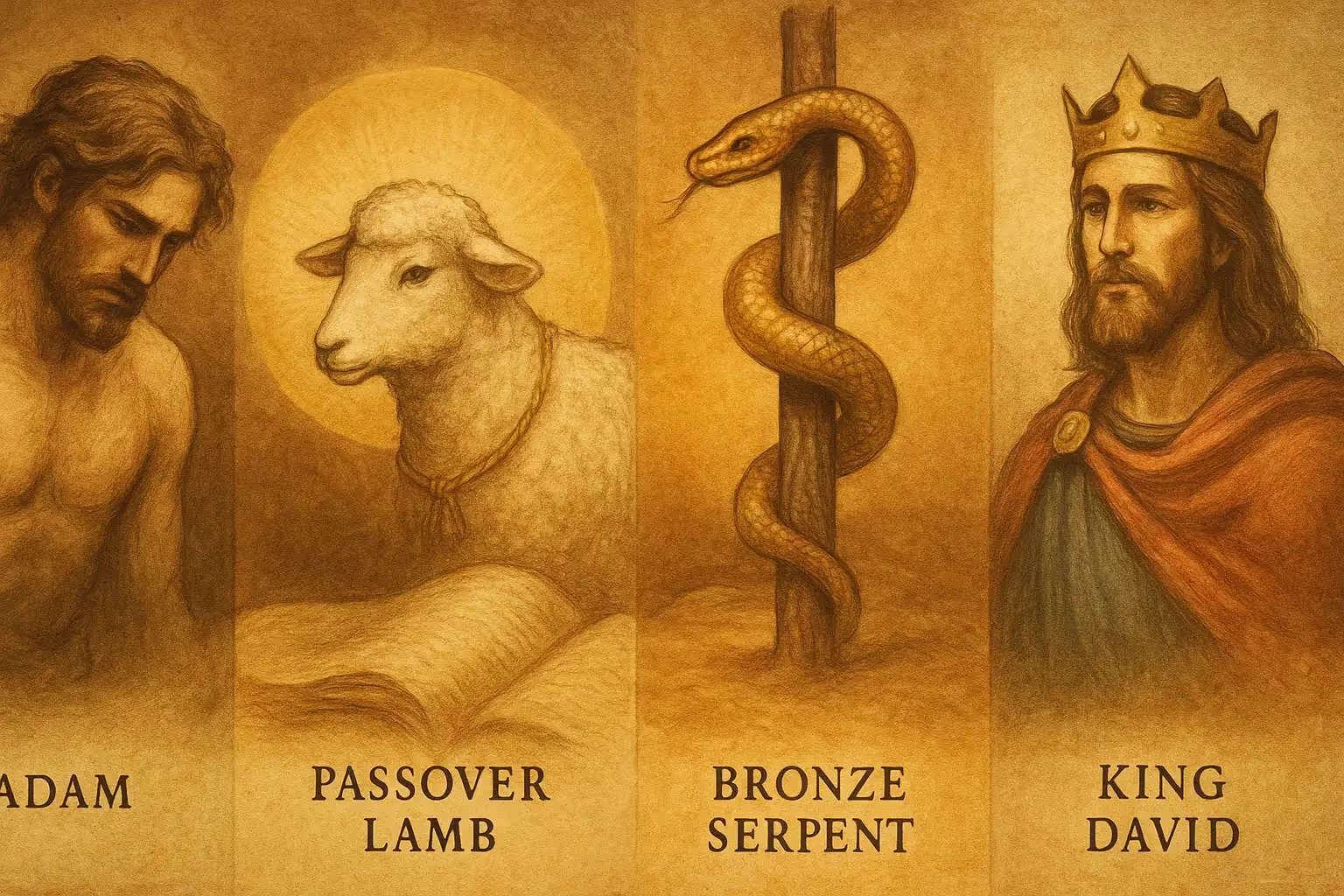
Adam is called “a type of the One who was to come” (Romans 5:14). As the first man and representative head of humanity, Adam’s disobedience brought sin and death into the world. In contrast, Christ’s obedience and righteousness bring life and restoration. This Adam–Christ parallel is foundational for understanding Paul’s theology of salvation and the reversal of the Fall.
In Adam, we see the tragic consequences of human rebellion; in Christ, we see the gracious gift of new creation. The story of Adam is not simply an ancient tale; it sets up a pattern of representation, failure, and hope that Christ finally resolves.
The lamb whose blood saved Israel from judgment (Exodus 12) foreshadows Jesus, “the Lamb of God who takes away the sin of the world” (John 1:29). The Passover event combines themes of judgment, substitution, and deliverance, all of which are taken up and intensified in the cross of Christ.
Year after year, Israel rehearsed this story in the Passover meal, remembering how God redeemed them from slavery. When Jesus institutes the Lord’s Supper during Passover, He intentionally places His death within this narrative of liberation and atonement. The lamb was always pointing beyond itself to a greater sacrifice.
Lifted up in the wilderness so the people could live (Numbers 21:8–9), the bronze serpent anticipates Christ being lifted up on the cross (John 3:14–15). Those who looked at the serpent in faith were healed from the deadly effects of their sin and rebellion. Likewise, those who look in faith to the crucified Christ receive forgiveness and eternal life.
This striking image emphasizes both the seriousness of sin and the surprising means of salvation. In both cases, healing comes through God’s provision, not human effort, and the act of looking is an act of trust.
David’s kingship becomes a template for the Messiah’s eternal reign. God’s promise to David in 2 Samuel 7—that one of his descendants would sit on the throne forever—creates a powerful expectation of a royal deliverer. Over time, the title “Son of David” becomes shorthand for this hoped-for Messiah.
Jesus fulfills this as the promised descendant who will rule forever (2 Samuel 7:12–16 → Luke 1:32–33). The Gospels present Jesus as a king who enters Jerusalem on a donkey, is hailed with messianic titles, and yet wears a crown of thorns. His path to kingship runs through suffering, but His resurrection and exaltation confirm that He is indeed the eternal King in David’s line.

The table below provides a simplified reference showing how Christ is foreshadowed in the Old Testament through direct prophecy and fulfillment. It can serve as a quick guide or a starting point for deeper study.
Messiah born in Bethlehem
OT: Micah 5:2
NT: Matthew 2:1
Meaning: Shows that the Messiah would come from a humble yet royal birthplace.
Virgin birth
OT: Isaiah 7:14
NT: Matthew 1:22–23
Meaning: Emphasizes the divine origin and unique identity of the Messiah.
Suffering Servant
OT: Isaiah 53
NT: 1 Peter 2:24
Meaning: Reveals the Messiah’s role in atoning for humanity’s sin through suffering.
New Covenant
OT: Jeremiah 31:31–34
NT: Luke 22:20
Meaning: Jesus brings a new era of forgiveness and inward heart renewal.
Pierced Messiah
OT: Zechariah 12:10
NT: John 19:37
Meaning: Foreshadows the crucifixion and the later recognition of the One who was pierced.
This list is not exhaustive. Many other passages, including Psalms 2, 22, and 110, as well as Daniel 7, are central to how the New Testament portrays Jesus as the promised Messiah.
Understanding the gospel in the Old Testament is essential for seeing the continuity of Scripture. The core themes of grace, sacrifice, redemption, promise, and faith appear from Genesis onward. The good news is not an unexpected plot twist but the culmination of God’s longstanding commitment to bless the nations through His chosen people.
Throughout the Old Testament, we see God consistently moving toward sinners with both justice and mercy. The sacrificial system, priesthood, kingship, and prophetic calls to repentance all contribute pieces of the larger gospel mosaic. By the time we reach the New Testament, the stage is set for Jesus to bring these strands together into a single, climactic act of salvation.
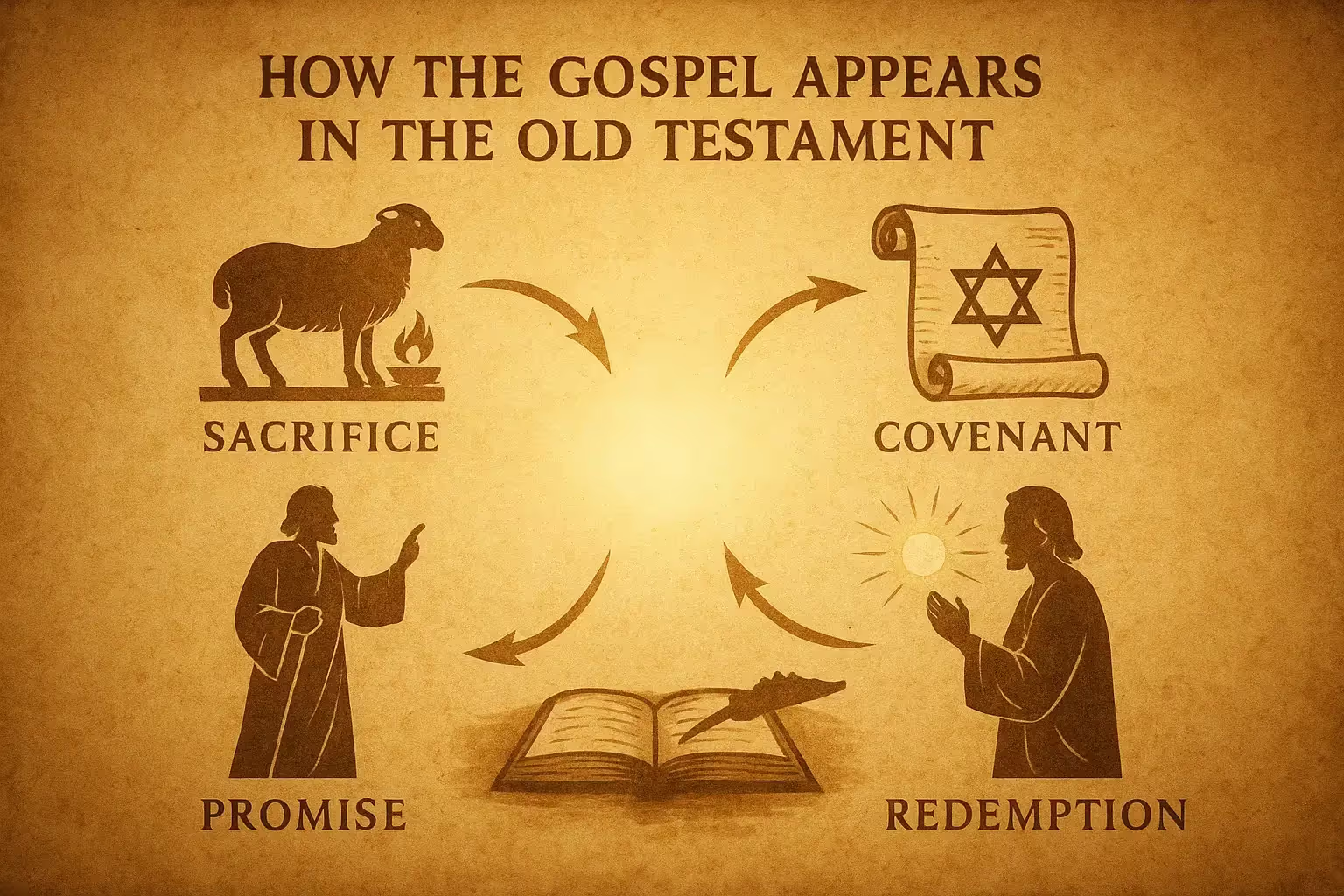
Several key Old Testament covenants prepare the way for messiah prophecy explained in the New Testament. Each covenant deepens and clarifies the promise, drawing a line that ultimately leads to Christ.
These covenantal promises form the backbone of how Christians understand messianic prophecy and its fulfillment in Christ. They are not isolated contracts but successive layers of one unfolding plan that finds its climax in the life, death, and resurrection of Jesus.
Isaiah 52–53 provides the clearest portrait of a suffering, rejected, yet victorious servant whose sacrifice brings healing and forgiveness. The Servant is despised, pierced, and crushed, yet by his wounds others are healed. He bears the iniquities of many and is ultimately vindicated by God.
The New Testament consistently identifies this figure with Jesus, drawing direct links between the Servant Songs and the passion of Christ. The language of “bearing sins,” “being led like a lamb to the slaughter,” and being “numbered with the transgressors” resonates powerfully with the Gospel accounts of Jesus’ trial and crucifixion.
For many Christians, Isaiah 53 is a key bridge between Old Testament expectation and New Testament fulfillment. It offers a lens through which to understand why the Messiah had to suffer before entering into glory.
The earliest Christian communities, composed largely of Jews who revered the Hebrew Scriptures, saw Jesus as the fulfillment of the prophecies of Jesus in the Old Testament. Their sermons in Acts, their letters, and the Gospels themselves are full of quotations and allusions to the Law, Prophets, and Writings.
In Peter’s sermon at Pentecost (Acts 2), for example, he cites Joel and the Psalms to argue that Jesus’ death and resurrection were part of God’s predetermined plan. Paul’s letters frequently appeal to Abraham, David, and the prophets to demonstrate that the gospel he preaches is in continuity with God’s earlier promises.
This early Christian reading is not merely proof-texting. It reflects a conviction that history is guided by God toward a Christ-centered goal. Therefore, when we study Jesus in the Old Testament today, we are following a pattern established by the apostles themselves.
The fulfillment of prophecy reveals several key truths about God and Scripture:
This is central to biblical theology Christ, which sees the entire Bible as a coherent story centered on Jesus. When we read the Old Testament with Christ in view, we are not forcing a foreign meaning onto the text but discovering the trajectory that was always there, now clarified by the light of the New Testament.
Understanding prophecy also strengthens faith by showing the intentional design of God’s revelation and the way Old and New Testaments are bound together. For many believers, seeing how specific texts converge in Christ can be a powerful confirmation that the gospel is rooted in history and grounded in God’s unchanging character.
For those who want to explore messianic prophecy more deeply, a few practical guidelines can help:
By following these principles, students of Scripture can appreciate both the richness and the complexity of prophecy, avoiding simplistic readings while still affirming the strong Christ-centered focus of the biblical narrative.
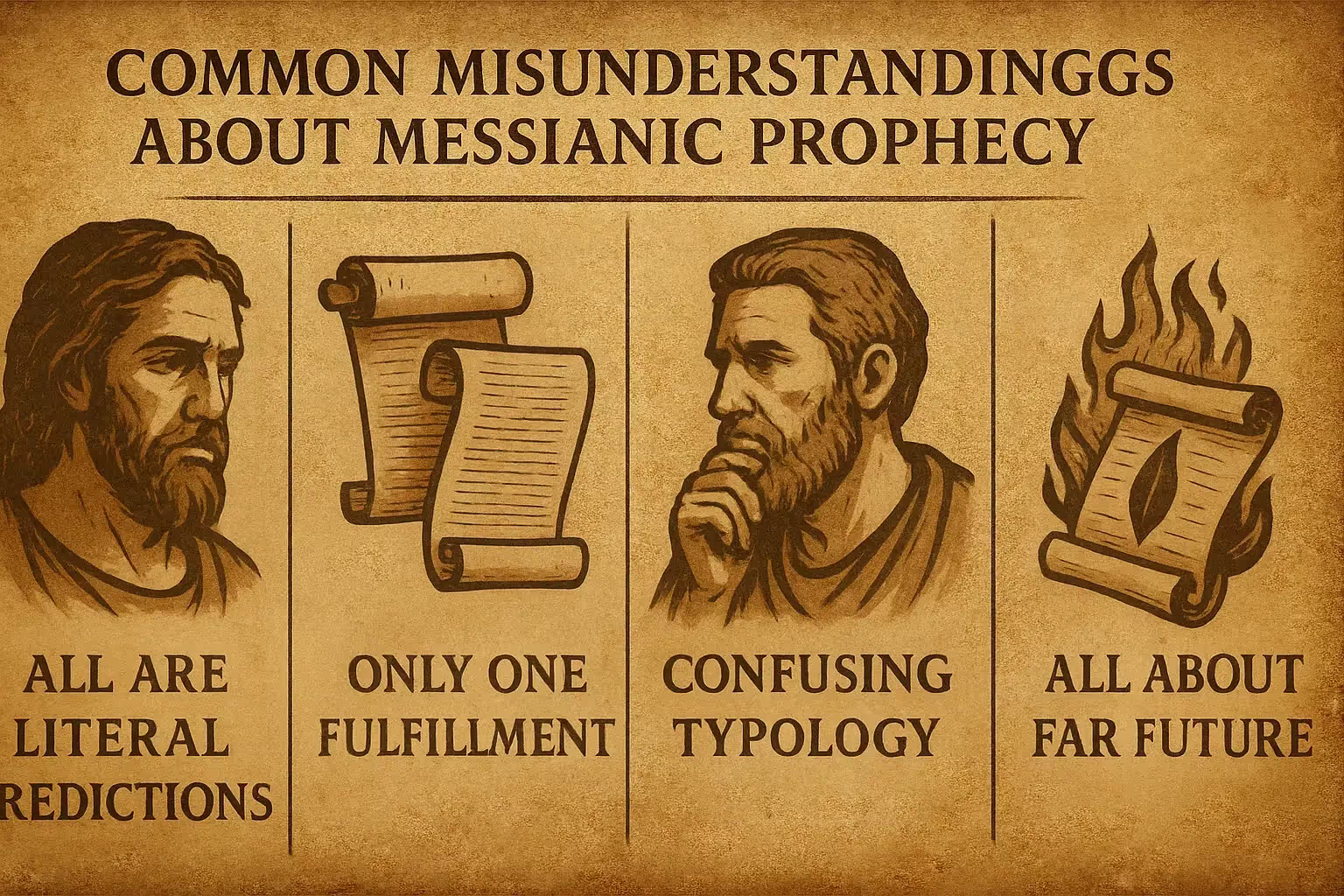
Despite the richness of Old Testament prophecy, several misunderstandings often arise:
Clarifying these issues helps prevent disappointment and confusion when studying prophecy and allows for more respectful dialogue between different faith traditions.
How many prophecies about Jesus are in the Old Testament?
Estimates vary, but scholars typically identify around 60 specific messianic prophecies and more than 250 passages that relate to Jesus typologically or thematically. The exact count depends on how strictly one defines “prophecy” and “type.” Rather than focusing only on a number, it can be more fruitful to see how these passages together create a rich and coherent picture of the coming Messiah.
Are all Old Testament prophecies literally fulfilled in Jesus?
Some prophecies are fulfilled literally, such as His birth in Bethlehem. Others are fulfilled typologically, such as the Passover lamb or the temple system. The New Testament recognizes both forms of fulfillment and treats them as part of God’s unified plan. Learning to appreciate this range of fulfillment helps us avoid overly rigid expectations about how God must keep His promises.
What is the difference between prophecy and typology?
Prophecy predicts future events or persons directly, often with explicit future-oriented language. Typology uses persons, institutions, or events as symbolic patterns that foreshadow Christ without always being framed as predictions. Both work together to reveal God’s redemptive design. Understanding this difference allows us to read the Old Testament with greater nuance while still affirming its Christ-centered focus.
Why do some Jews not accept Christian interpretations of these prophecies?
Jewish tradition applies different interpretive methods and messianic expectations. Many Jewish interpreters understand key texts (such as Isaiah 53 or Daniel 7) in non-Christological ways, seeing them as referring to Israel, a collective righteous remnant, or another figure rather than to Jesus of Nazareth. Recognizing this difference can foster more respectful conversation and help Christians articulate why they see Jesus as the fulfillment of these hopes.
Which prophecy is considered the clearest about the Messiah?
Isaiah 53 is widely regarded by Christians as the most explicit and detailed depiction of the suffering Messiah fulfilled in Jesus. It describes rejection, suffering, substitutionary atonement, and ultimate vindication in terms that closely parallel the passion narratives in the Gospels. Other texts, such as Psalm 22 and Psalm 110, also play a central role in Christian reflection on the identity of the Messiah.
Can non-specialists study messianic prophecies fruitfully?
Yes. While scholarly resources can be very helpful, ordinary readers can gain much by reading the Old Testament carefully, paying attention to cross-references, and noting how the New Testament cites earlier passages. Study Bibles, Bible dictionaries, and reputable online tools can make the world of messianic prophecy more accessible to everyone.
NOVEMBER 25, 2025
NOVEMBER 24, 2025
NOVEMBER 24, 2025
NOVEMBER 24, 2025
NOVEMBER 24, 2025