

Why Christian Community Matters More Than Ever
NOVEMBER 25, 2025
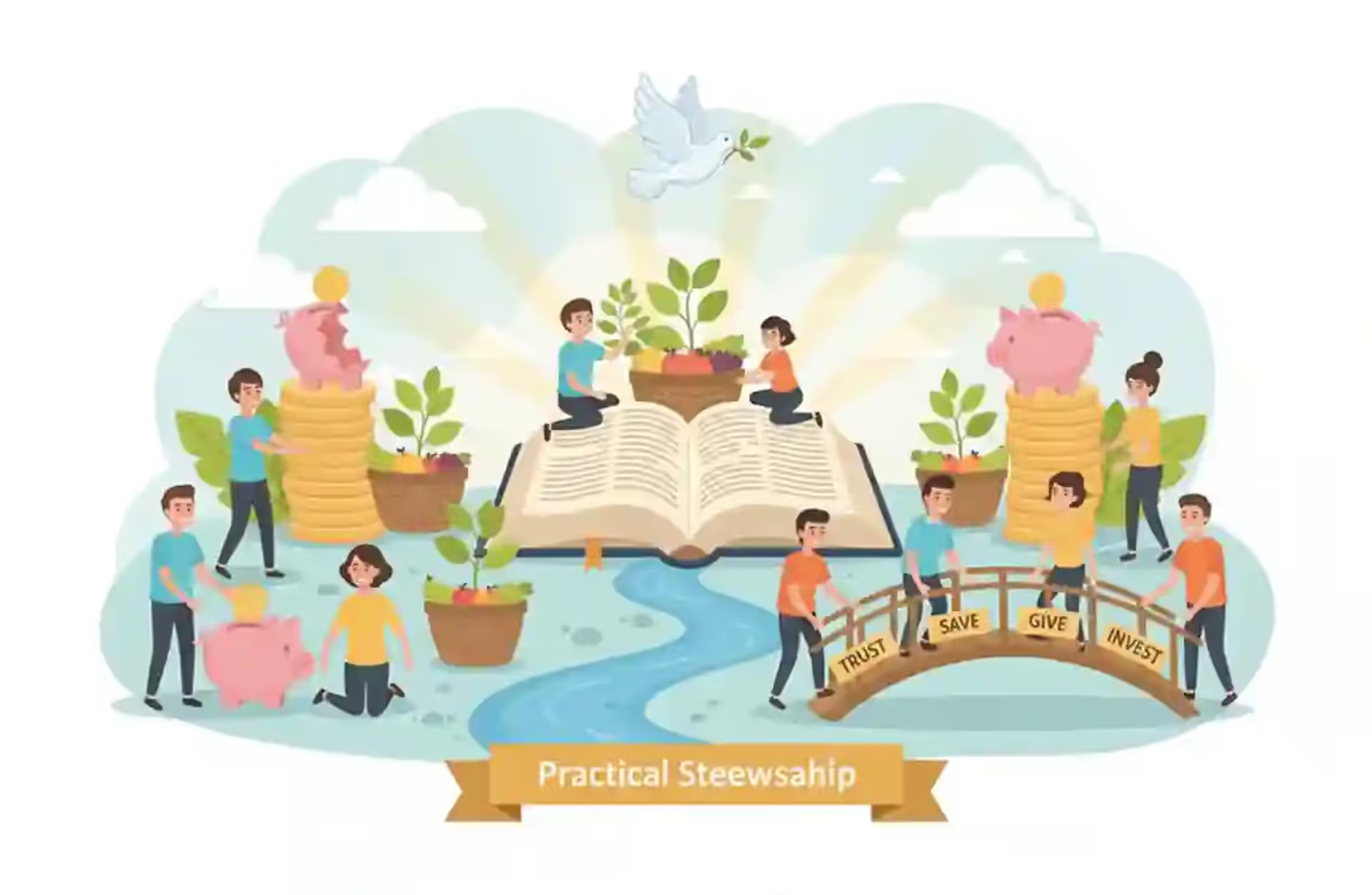
Michael Torres stared at the stack of bills spread across his kitchen table at two in the morning, unable to sleep because anxiety about how to pay them kept his mind racing through calculations that never produced solutions no matter how many times he rearranged the numbers desperately. He had lost his job three months ago when his company downsized unexpectedly, and despite applying to dozens of positions weekly, callbacks remained frustratingly rare in an economy where competition for every opening seemed impossibly fierce. His unemployment benefits barely covered rent, leaving nothing for the utilities, car payment, insurance, groceries, and credit card minimum payments that continued demanding money he simply did not have regardless of how urgently bills threatened consequences for non-payment. Michael had always considered himself a faithful Christian who trusted God's provision, yet now that faith felt hollow when confronted with the concrete reality of bills due in five days with bank account showing forty-three dollars that would not stretch to cover even one-tenth of what he owed this month alone. He felt ashamed for struggling financially despite years of working hard and trying to be responsible with money, ashamed for feeling angry at God for allowing this crisis despite fervent prayers for breakthrough that seemed to go unanswered month after month, and ashamed for doubting whether biblical promises about provision actually worked in real life when theory met practice unsuccessfully. The Christian financial advice he had heard over the years suddenly felt inadequate because it always assumed having income that wise stewardship would manage properly, never addressing what to do when income simply stopped while expenses continued relentlessly regardless of circumstances beyond your control that crisis created through no fault of your own necessarily.
This article explores how believers can navigate financial crisis with both faith and practical wisdom, addressing what trusting God actually looks like when money runs out and providing biblical guidance that works in desperate situations rather than only during prosperous times. Let me help you understand why financial crisis feels like spiritual crisis simultaneously, what the Bible really teaches about provision versus what prosperity teaching distorts, and how to make wise decisions while maintaining hope when options all seem impossible currently.
Before I show you practical strategies for navigating financial crisis, I need to help you understand why money struggles create such profound spiritual distress beyond the obvious stress that unpaid bills produce naturally. Think about what money represents in our lives beyond its function as medium of exchange for goods and services. Money provides security, enables us to care for loved ones, creates options for addressing problems that arise, and allows us to participate in society through activities that cost requires paying inevitably. When money disappears, these capacities vanish simultaneously, leaving you feeling powerless in ways that threaten your sense of identity as responsible adult who provides for dependents and manages life competently. As Paul Tripp writes at Desiring God about debt and money problems, it is tempting to believe that the solution to financial struggles begins with paychecks, budgets, and investments, but debt must be rooted in a distinctly biblical worldview that allows the gospel of Jesus Christ to shape our understanding.
Additionally, money intersects with faith in ways that make financial crisis feel like divine abandonment when you have been taught that God provides for believers who trust him faithfully. Let me use a comparison that will help you see this dynamic clearly. Imagine a child whose parent has always provided meals consistently, never letting the child go hungry despite occasional tight finances that adults managed privately. If suddenly meals stopped appearing and the child felt hunger's discomfort directly, the child would naturally question whether the parent still loved them or whether something had changed fundamentally in the relationship that provision used to demonstrate reliably. Similarly, when you face financial crisis despite praying earnestly and trusting God sincerely, you may wonder whether your faith is inadequate, whether God has abandoned you specifically, or whether biblical promises about provision actually apply to your situation currently when circumstances suggest otherwise convincingly.
The situation feels even more spiritually complex when you observe other believers who seem financially blessed despite not appearing more faithful than you are personally, which creates questions about fairness and about what determines who receives provision abundantly versus who struggles constantly. Resources addressing faith and finances, like those from Crown Financial Ministries, recognize that financial struggles affect spiritual wellbeing significantly and require integrated responses that address both practical and spiritual dimensions simultaneously rather than treating them as separate issues that isolation handles adequately. The ministry, founded on the merger of Larry Burkett's Christian Financial Concepts and Howard Dayton's Crown Ministries, has helped millions of people understand that biblical stewardship principles apply even during crisis, not just during seasons of abundance.
Let me help you distinguish between what the Bible actually teaches about God's provision and what prosperity theology claims falsely through distorting scripture to promise material wealth that obedience supposedly guarantees receiving automatically. The prosperity gospel suggests that faith functions like transaction where sufficient belief purchases blessing from God, that poverty indicates lack of faith or unconfessed sin, and that financial struggle means you are doing something wrong spiritually that correction would resolve immediately. However, this teaching contradicts both scripture and observation, because the Bible contains countless examples of faithful believers who experienced hardship including poverty, because Jesus himself had nowhere to lay his head and warned that following him might cost everything materially, and because history records faithful Christians suffering financially while maintaining strong faith throughout circumstances that provision did not resolve quickly despite fervent prayer. As theologians at The Gospel Coalition have articulated regarding a biblical theology of money, God is the owner of everything, which makes us not owners but stewards of money, and our job is to deploy money according to his priorities rather than our own desires.
What scripture actually promises involves God's presence during difficulty, provision of what we genuinely need rather than everything we want, wisdom for navigating challenges, and ultimate care that transcends immediate circumstances even when those circumstances remain difficult presently. Consider Jesus's teaching in Matthew 6:25-34, where he instructs followers not to worry about what they will eat or drink or wear, pointing to how God feeds the birds and clothes the flowers as evidence that he will care for his children who are more valuable than these. However, notice that Jesus does not promise believers will never experience hunger or lack clothing, but rather that they should not be consumed by worry because their heavenly Father knows what they need. This means trusting God through financial crisis does not require pretending you have money when you do not, claiming prosperity that reality contradicts, or believing that faith will produce immediate financial rescue that magic resembles more than relationship ultimately.
The distinction matters enormously because prosperity theology leaves people feeling spiritually failed when financial hardship persists, whereas biblical teaching about provision allows you to maintain faith even when circumstances remain difficult. Scripture acknowledges that faithful believers sometimes suffer, that God's timing often differs from our preferences, and that provision sometimes comes through unexpected channels rather than through obvious solutions we would choose ourselves. This perspective frees you from shame about financial struggle because difficulty does not indicate spiritual failure, and it empowers you to take practical action because waiting passively for miraculous intervention is not what faith requires when wisdom and effort remain possible options that responsibility demands pursuing diligently.
Now let me walk you through concrete actions you can take when facing immediate financial crisis, because faith includes wisdom and action rather than passive waiting for miraculous intervention that responsibility abdicates dangerously. Think of this like when someone is drowning, where the appropriate response involves both praying for rescue and also swimming toward shore rather than simply treading water while waiting for helicopter to appear magically. God typically works through natural means including human effort, community support, and wise decision-making rather than through bypassing these channels completely in ways that would make earthly life irrelevant to spiritual reality artificially.
The first critical step involves making a complete assessment of your actual financial situation by listing all income sources, all necessary expenses, all debts with their terms and consequences, and all potential resources you might access through asking for help that pride often prevents pursuing despite need justifying request legitimately. This assessment feels overwhelming because seeing everything together makes the crisis feel more real, yet this reality check actually empowers better decision-making than avoiding the numbers through fear that knowledge increases rather than alleviates practically. Once you know exactly where you stand, you can prioritize what must be paid first based on consequences that non-payment would produce, distinguishing between bills that threaten immediate essential needs like housing and utilities versus bills that create long-term problems but not immediate crises like credit cards that damage scores without creating homelessness directly. Financial experts like those at Dave Ramsey's organization emphasize that an emergency fund is critical precisely because life happens—a car breaks down, medical bills arrive unexpectedly—and without cash available, these moments can turn into debt nightmares that compound existing problems exponentially.
Let me give you a framework for prioritizing that will help you make these difficult decisions wisely. Pay first for four walls and wheels, meaning housing costs that prevent eviction, utilities that maintain basic living conditions, food that sustains health, and transportation that enables work or job searching that income requires accessing practically. After securing these essentials, address other obligations in order of consequences they create, with medical necessities and secured debts like car loans taking priority over unsecured debts like credit cards that cannot repossess items immediately. This prioritization may mean some bills go unpaid temporarily, which feels like failure but actually represents wise stewardship when resources simply cannot cover everything simultaneously regardless of how responsibly you manage what little you have currently.

Faith Takes Responsible Action While Trusting God With Outcomes Let me help you understand what genuine faith looks like during financial crisis through distinguishing it from presumption that passivity disguises as trust inappropriately. Faith involves doing everything you reasonably can to address your situation while recognizing that outcomes ultimately depend on factors beyond your control that God oversees sovereignly. This means applying for jobs persistently rather than waiting for perfect opportunity to appear without effort. It means cutting expenses ruthlessly to extend available money further. It means asking family, friends, or church for help when need exceeds your capacity to meet it alone through resources that community exists to provide mutually. It means exploring government assistance programs, negotiating with creditors about payment plans, and considering additional income sources through side work that pride might normally reject as beneath you professionally. Faith does not sit passively claiming God will provide while refusing to take actions that provision typically requires participating in actively rather than receiving without effort magically. As one writer at Desiring God explains regarding money and stewardship, being planless is not being free; being planless makes you a slave to money, but a good financial plan turns money into your servant to serve what you really value.
Presumption Expects Miracles While Avoiding Practical Steps Now let me show you what presumption looks like so you can recognize when you might be confusing it with faith dangerously. Presumption claims to trust God while simultaneously refusing to take practical actions that wisdom requires implementing urgently. This might involve not cutting expenses because you believe God will provide money to maintain current lifestyle despite changed circumstances. It might mean refusing to ask for help because you assume God will deliver provision without requiring you to humble yourself through admitting need vulnerably. It might involve not applying for positions you consider below your skill level because you claim to be waiting for God to open better doors despite bills accumulating while you wait selectively. Think about how parents provide for children through combination of direct provision and through teaching children to work and to make wise choices rather than simply giving everything without requiring any effort or responsibility from children who must develop capacities that dependence would never build adequately. Similarly, God's provision typically involves both divine help and human responsibility working together rather than God doing everything while you do nothing beyond claiming faith that passivity rationalizes through spiritual-sounding language ultimately.
Trusting God through financial crisis does not mean sitting passively and waiting for money to appear miraculously, but rather means doing everything practically possible to address your situation while believing that God works through your efforts, through other people's help, and through circumstances that provision orchestrates using natural means that wisdom recognizes rather than bypassing completely through supernatural intervention that dependence creates unhealthily.
Let me address one of the most difficult aspects of financial crisis, which involves making decisions when none of your options feel good and when every choice seems to involve sacrifice or compromise that would be unacceptable under normal circumstances but that desperation makes necessary currently. Think about how this differs from decision-making during prosperity, where you choose between good options based on preference rather than between bad options based on which creates least harm ultimately. This shift requires different framework for evaluating choices because standard decision-making assumes resources adequate for multiple priorities simultaneously whereas crisis demands choosing which priorities to maintain versus which to sacrifice temporarily.
The key principle involves distinguishing between temporary setbacks and permanent damage when evaluating which bills to pay versus which to let slide currently. Credit card payments skipped for few months damage your credit score but this recovers over time once you resume paying eventually. However, losing housing through eviction or losing transportation through repossession creates immediate crises that affect your capacity to work and to rebuild financially in ways that recovery complicates significantly compared to credit score damage alone. Similarly, maintaining minimum nutrition and essential healthcare takes priority over entertainment, dining out, or discretionary purchases that normal life included but that crisis demands eliminating temporarily until stability returns sufficiently.
Additionally, be willing to make temporary sacrifices that pride resists accepting despite wisdom requiring flexibility about what constitutes acceptable living conditions during emergency periods:
These choices do not define your worth or represent permanent failure but rather demonstrate adaptive capacity to do what circumstances require surviving crisis that rigidity would make worse through refusing adjustments that flexibility enables implementing successfully. Resources like nonprofit credit counseling organizations offer frameworks for navigating these difficult decisions wisely, often providing free sessions where counselors who are bound by law to offer the best financial advice help assess your position and evaluate options based on your specific income and debt situation.
Now let me address what prevents many people from accessing help that would alleviate their crisis significantly, which involves shame about needing assistance and fear of judgment from others who might view financial struggle as personal failure that responsibility should have prevented occurring inevitably. This shame keeps people isolated and suffering longer than necessary because they cannot bring themselves to admit need that vulnerability exposes publicly despite community existing precisely to provide mutual support during seasons when individual resources prove insufficient for navigating difficulties alone successfully.
Let me help you reframe asking for help through understanding what Christian community is designed to provide when functioning according to biblical vision. The early church, as described in Acts 2:44-45, shared resources so that no one lacked necessities, with those having abundance supporting those experiencing scarcity through recognizing that financial circumstances fluctuate across lifetimes and that today's helper might become tomorrow's recipient when situations reverse unpredictably. When you ask church, family, or friends for help during crisis, you honor them by trusting them enough to be vulnerable and you provide them with opportunity to live out faith practically through service that love demonstrates tangibly rather than merely professing abstractly without action. As commentators on this passage note, the early Christians sold their possessions and distributed to others as any had need, demonstrating that the church says "what's mine is yours" through voluntary, life-giving generosity rather than forced redistribution.
Practically, this means approaching your church leadership to explain your situation and to ask about assistance programs, benevolence funds, or members who might help through providing meals, covering specific bills, or offering employment opportunities that networks reveal accessibility. It means telling trusted friends honestly that you are struggling financially and asking whether they know of job openings, have items they no longer need that you could use, or can provide practical support through childcare, transportation, or other non-monetary help that expenses reduce significantly. It means applying for government assistance programs without shame, recognizing that these exist specifically for situations like yours and that using them temporarily while rebuilding represents wisdom rather than weakness that judgment would condemn unfairly.
Let me introduce a concept that most financial advice overlooks but that scripture emphasizes as essential for navigating crisis with faith intact, which involves cultivating contentment even when circumstances provide far less than you desire or than you previously enjoyed experiencing. Contentment does not mean pretending you have no needs or that your situation is acceptable when it genuinely creates hardship that suffering accompanies legitimately. Rather, contentment involves finding peace and even gratitude within difficult circumstances because your fundamental security rests in God rather than in money that comes and goes unpredictably regardless of how faithfully you manage it when present.
The apostle Paul wrote about learning contentment in all circumstances, whether well-fed or hungry, whether living in plenty or in want, through Christ who strengthened him for whatever he faced (Philippians 4:11-13). Notice that Paul learned contentment rather than possessing it naturally, which means this capacity develops through practice during difficulty rather than arriving automatically when crisis occurs suddenly. Paul had experienced significant hardship including poverty, yet he did not interpret these experiences as evidence of God's abandonment or as punishment for inadequate faith. Instead, he understood that circumstances do not determine spiritual reality and that God's presence and purposes continue operating even when material provision falls short of what comfort would prefer receiving reliably.
This perspective transforms how you experience financial crisis spiritually even before circumstances improve materially. When contentment grounds your identity in God rather than in bank balance, you can acknowledge difficulty honestly without allowing it to define you completely. You can take practical action to improve your situation without obsessing over outcomes that remain beyond your control ultimately. You can receive help from others without shame because your worth does not depend on self-sufficiency that independence idolizes inappropriately. You can even discover unexpected blessings within crisis, including deeper relationships formed through shared vulnerability, character developed through perseverance, and faith strengthened through dependence on God that prosperity never required as urgently previously.
Let me address how financial crisis affects relationships within your household, because money problems consistently rank among the leading causes of marital conflict and family stress that divorce and estrangement frequently follow when crisis persists without resolution over extended periods. The stress of unpaid bills, the fear of losing housing or transportation, the shame of struggling financially, and the exhaustion of constant worry all combine to create relational tension that spills over into interactions with spouse and children who bear the weight of circumstances they cannot control and may not fully understand depending on their age and awareness of family finances.
Protecting your marriage during financial crisis requires intentional communication about money that many couples avoid even during prosperity because the topic feels uncomfortable or because different perspectives about spending and saving create conflict that avoidance seems to prevent temporarily. However, crisis makes avoidance impossible because decisions must be made urgently about which bills to pay, which expenses to cut, and how to pursue solutions that both partners must implement cooperatively rather than unilaterally. This means scheduling regular conversations about finances where both partners share concerns, discuss options, and make decisions together rather than one partner assuming all responsibility and resenting the other for not participating equally or for questioning choices made under impossible pressure.
Additionally, protecting your children during financial crisis involves age-appropriate honesty that acknowledges difficulty without creating anxiety that exceeds their capacity to process or that burdens them with responsibility they cannot carry developmentally. Young children need reassurance that parents are addressing the situation and that the family will be okay even if some things change temporarily. Older children and teenagers can understand more about family finances and may even contribute through reducing their own expenses, helping with household tasks that save money, or working part-time if appropriate for their age and schedule. What children at any age need most is seeing parents handle stress with faith and mutual support rather than with blame and conflict that crisis cannot justify even when it explains why tensions run higher than normal circumstances would produce typically.
Let me help you identify markers of progress during financial recovery so that you can recognize improvement even when it feels glacially slow compared to how quickly crisis developed initially. Recovery from financial crisis rarely happens as dramatically as the crisis arrived, with months or even years typically required for rebuilding stability that collapse destroyed rapidly through job loss, medical emergency, or other sudden income disruption that savings could not absorb adequately. This slow recovery can feel discouraging when comparing today's difficult circumstances with yesterday's crisis shows minimal difference despite weeks of effort that results should have produced more visibly theoretically.
However, progress happens incrementally through small improvements that accumulation makes significant eventually even when individual steps seem insignificant isolated. Getting interview callbacks indicates improving job market conditions or better application strategies. Paying one bill on time that you could not pay last month demonstrates increasing capacity. Building small emergency fund of even few hundred dollars creates buffer that previous month lacked completely. Receiving help from community without needing to ask because they noticed your situation shows relationship strength that isolation would miss experiencing. Maintaining your faith and hope despite ongoing difficulty represents spiritual progress that circumstances cannot measure through financial metrics alone but that resilience demonstrates through perseverance that quitting would abandon prematurely.
The key involves measuring progress against where you were rather than against where you want to be eventually, because the latter comparison always produces discouragement through highlighting remaining distance whereas former comparison reveals actual movement that direction indicates accurately. Track small wins like stretching groceries further, like negotiating better payment terms with creditor, like finding side income source however modest, or like maintaining important relationships despite stress that isolation would create through withdrawing from community that support provides necessarily. These victories matter because they demonstrate agency and capacity rather than helplessness, showing that your actions make difference even when complete resolution remains distant currently.

Let me help you think beyond immediate crisis toward building resilience that protects you from future financial emergencies, because surviving current difficulty without learning from it leaves you vulnerable to repeating the experience when next disruption occurs inevitably given life's unpredictability that no amount of planning eliminates completely. Financial resilience involves having systems and resources in place that absorb unexpected shocks without creating crisis, including emergency savings, multiple income sources, manageable debt levels, and community relationships that provide support when individual capacity proves insufficient temporarily.
The foundation of financial resilience involves building emergency savings that cover three to six months of essential expenses, creating buffer that allows you to survive job loss, medical emergency, or other income disruption without immediately facing bills you cannot pay. This goal seems impossibly distant when you are currently in crisis with no savings and insufficient income, yet working toward it once stability returns prevents future crises from reaching the severity that current crisis has achieved. Even small amounts saved consistently build over time, and having any emergency fund provides psychological security that reduces financial anxiety significantly because you know unexpected expenses will not automatically become disasters requiring borrowing that compounds problems through interest accumulation.
Beyond emergency savings, financial resilience involves reducing debt to levels that your income can service comfortably even during reduced earnings periods, diversifying income sources so that losing one job does not eliminate all income simultaneously, and maintaining relationships with people who would help during crisis because you have helped them previously when their circumstances required support that community provides mutually. These practices take years to implement fully and require discipline that crisis makes difficult when survival demands all available energy and resources. However, keeping these goals in mind during recovery motivates decisions that build toward resilience rather than merely returning to pre-crisis vulnerability that another disruption would expose again eventually.
Michael Torres from our opening story eventually learned to navigate his financial crisis through combining faithful prayer with aggressive practical action rather than choosing between these approaches as though they contradicted each other. He swallowed his pride and asked his church for help, explaining his situation honestly to his small group leader who connected him with the benevolence fund that covered two months of rent while Michael continued job searching intensely. He took temporary work driving for rideshare service despite considering this beneath his professional level, recognizing that pride about job status mattered less than paying bills that income regardless of source would address practically.
Michael also discovered resources he had not known existed previously, including utility assistance programs that prevented his electricity from being shut off, food pantries that reduced his grocery expenses significantly, and career counseling services that improved his resume and interview skills substantially. He negotiated payment plans with creditors who preferred receiving partial payment over nothing, discovering that many companies have hardship programs they offer to customers who ask directly rather than simply defaulting without communication. He learned to distinguish between bills that demanded immediate attention because consequences were severe versus bills that could wait temporarily because consequences were manageable compared to losing housing or transportation that work required maintaining absolutely.
Most importantly, Michael stopped viewing his financial crisis as evidence that God had abandoned him or that his faith was inadequate somehow, instead recognizing that difficulty is normal part of life in broken world and that God's provision does not always mean preventing hardship but often means providing resources for navigating hardship successfully when elimination proves impossible currently. He learned to celebrate small victories like interview callbacks, like stretching groceries further through meal planning, like maintaining utilities despite tight budget, and like preserving important relationships despite stress that withdrawal would create through isolation that community prevents when connection maintains deliberately.
Eight months after losing his job, Michael finally secured employment in his field again, though at lower salary than his previous position paid initially. The crisis had depleted his savings completely and had damaged his credit through missed payments during worst months when choosing housing over credit cards represented only viable option realistically. However, Michael had also learned that his worth did not depend on his bank balance, that community support during vulnerability creates bonds that prosperity never strengthens as deeply, and that biblical teaching about God's provision proves true not through preventing all financial struggle but through sustaining believers through struggles that character develops and faith refines when tested severely but not beyond capacity for enduring faithfully ultimately. He still struggled financially compared to before crisis, but he had learned practical wisdom about money management, about distinguishing needs from wants, about asking for help without shame, and about trusting God through circumstances that resolution does not produce immediately despite fervent prayer that patience sustains when quick fixes remain elusive frustratingly yet hopefully simultaneously. The crisis that had threatened to destroy his faith had instead deepened it, teaching him experientially what scripture proclaimed theoretically about God's faithfulness through difficulty that prosperity never required testing as thoroughly or as transformatively as hardship had accomplished redemptively.
NOVEMBER 25, 2025
NOVEMBER 25, 2025
NOVEMBER 25, 2025
NOVEMBER 24, 2025
NOVEMBER 24, 2025